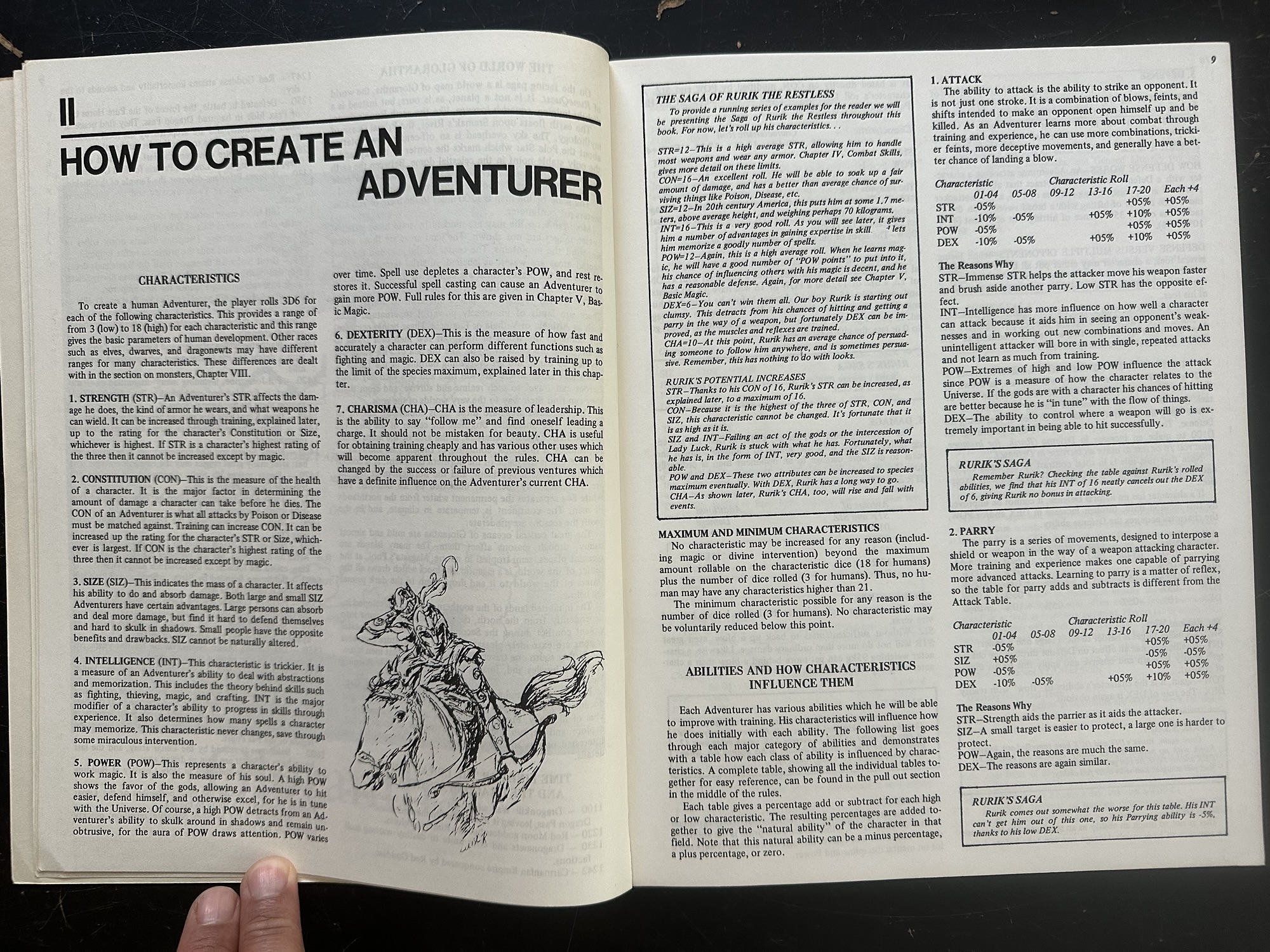
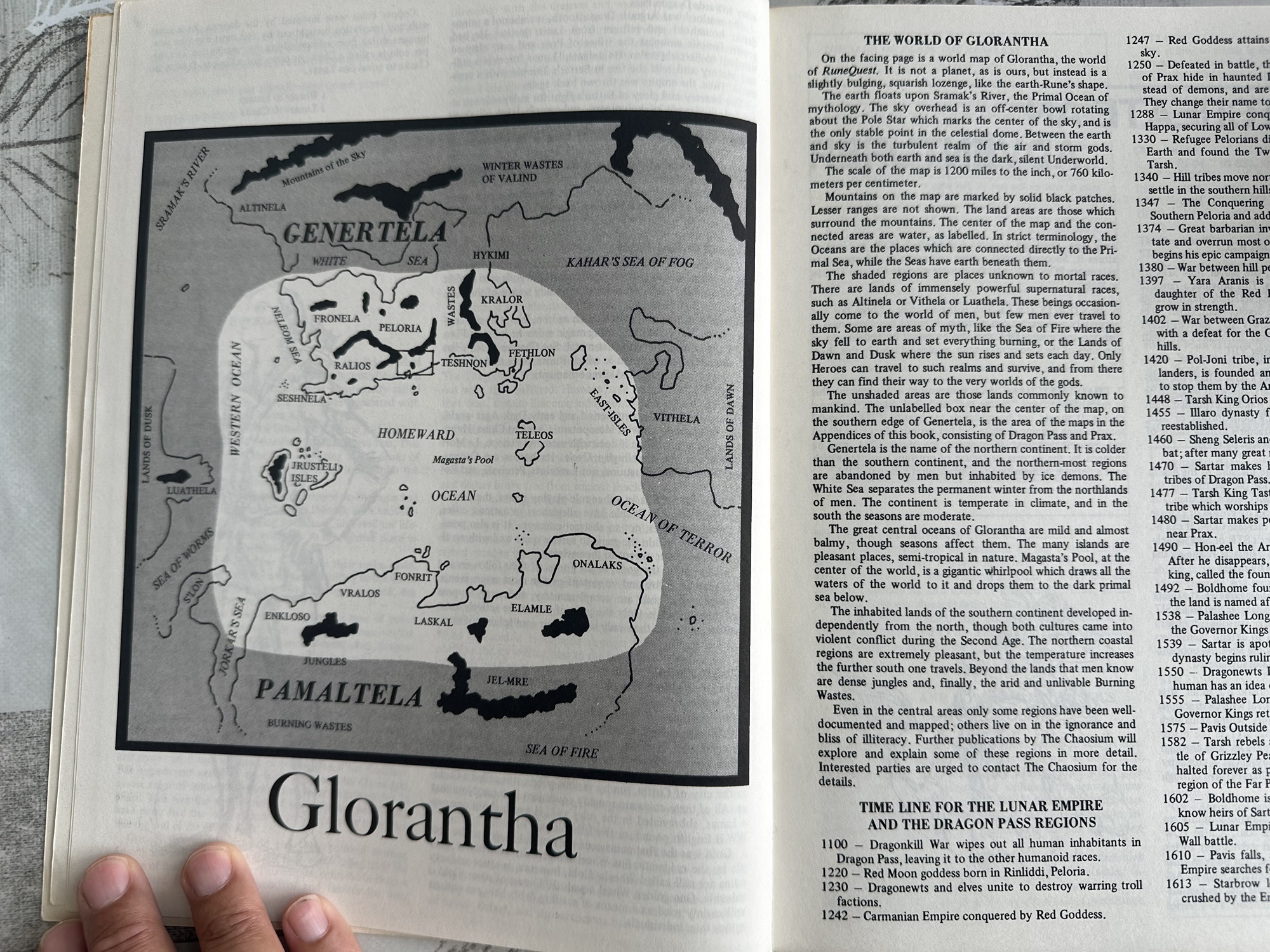
In the last article of the “Reading Classic RuneQuest” series, I looked at the Introduction chapter of the RuneQuest 2nd edition rulebook and noted that I would have things to say about the map of Glorantha we see here… as many of you know, I love maps, and this is one of the three classic and famous maps in this book! It deserves its own article!
I’m coming back to my “Reading Classic RuneQuest” series after a hiatus caused by, you know, having to deal with my twelve other hobby projects 😄 Last time I read through the “Basic Role-Playing” booklet and now I’m finally getting into the actual RuneQuest book proper! Yay! But don’t get too excited, we’ll only do the Introduction chapter! Booo!
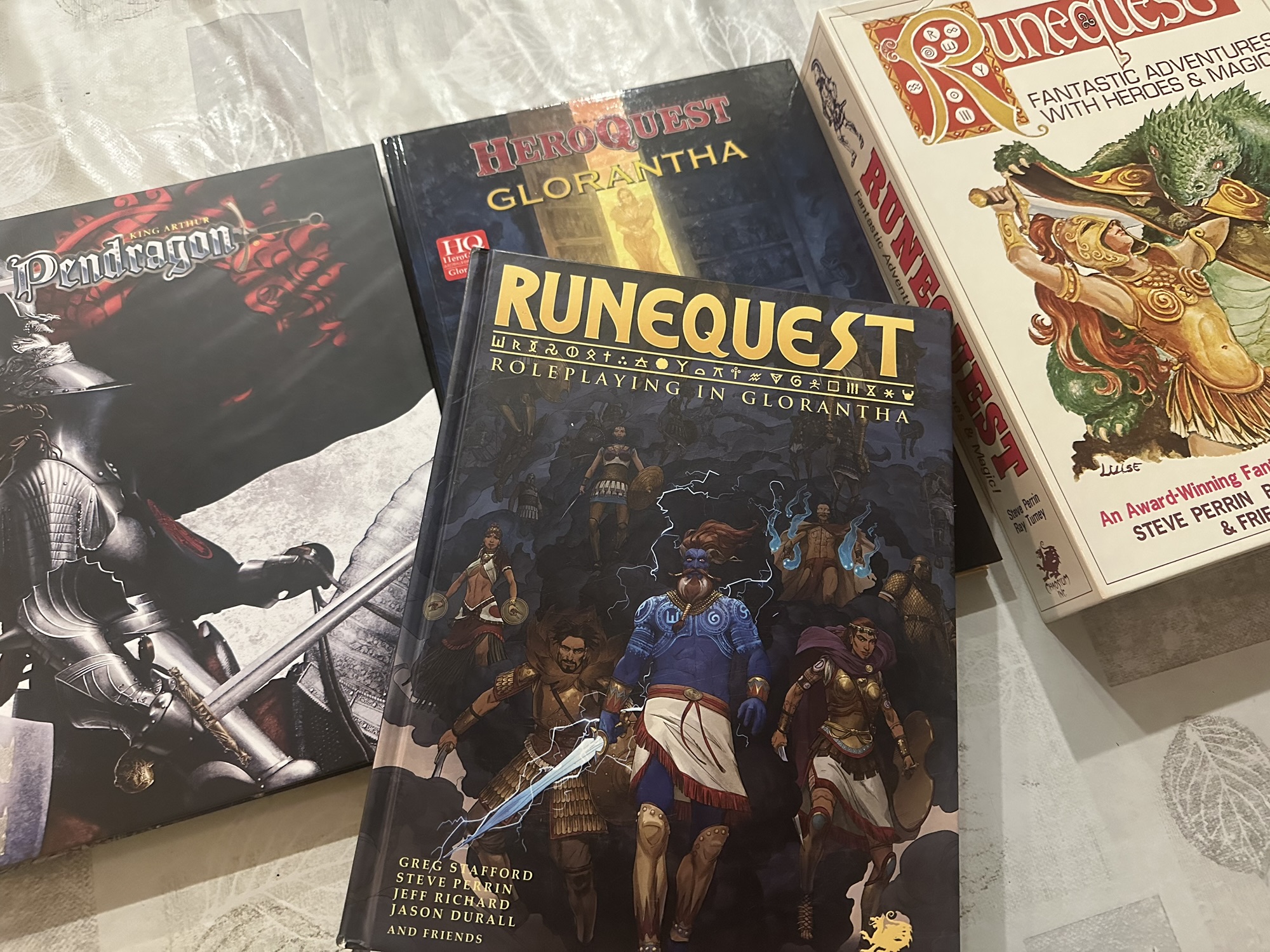
I recently wrote an article about how the “RuneQuest: Roleplaying in Glorantha” product line is getting bogged down with too much lore and not enough playable content. A comment I saw a few times in response to it is that Chaosium “has to” release more lore supplements to establish a “baseline” for Glorantha. Let’s address this… with random tables!
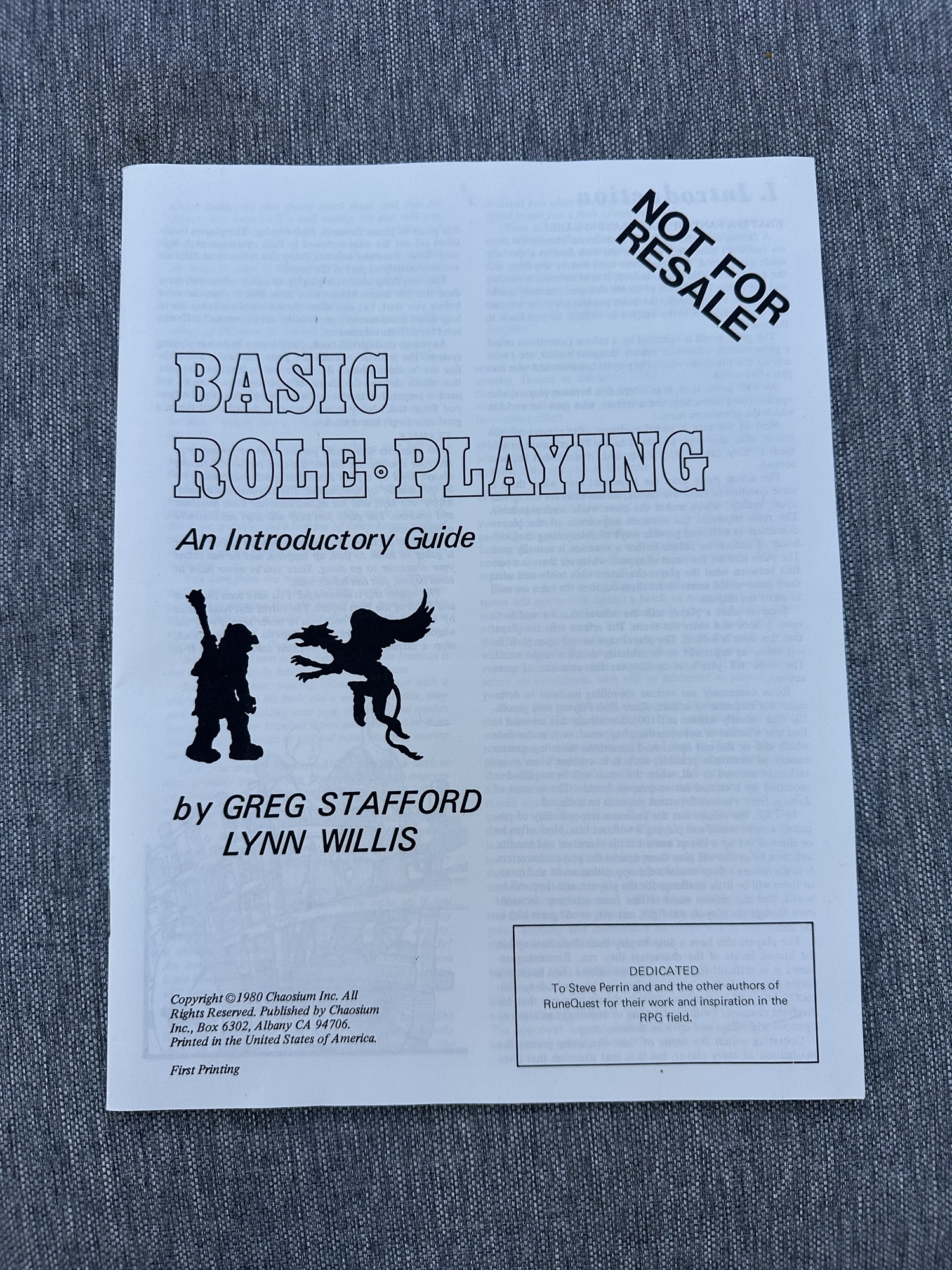
I’m back to reading the classic RuneQuest 2nd edition boxed set! See the first and second articles in the series if you missed them. Today we are reading the “Basic Role-Playing” booklet, written by Greg Stafford and Lynn Willis, with a couple illustrations by William Church.
This “introductory guide” to fantasy role-playing (FRP) and the Basic Role-Playing system (BRP) is a 16 pages-long booklet that, we are told, presents a “whole game system”. So in theory, you could completely ignore the rules in the bigger RuneQuest book and just play BRP directly from this. The BRP rules differ quite a lot from the RuneQuest rules, in that they’re much simpler, but you can tell they share the same chassis. I wonder how many early 1980s players decided to simplify aspects of RuneQuest by “downgrading” select rules to their BRP equivalent?
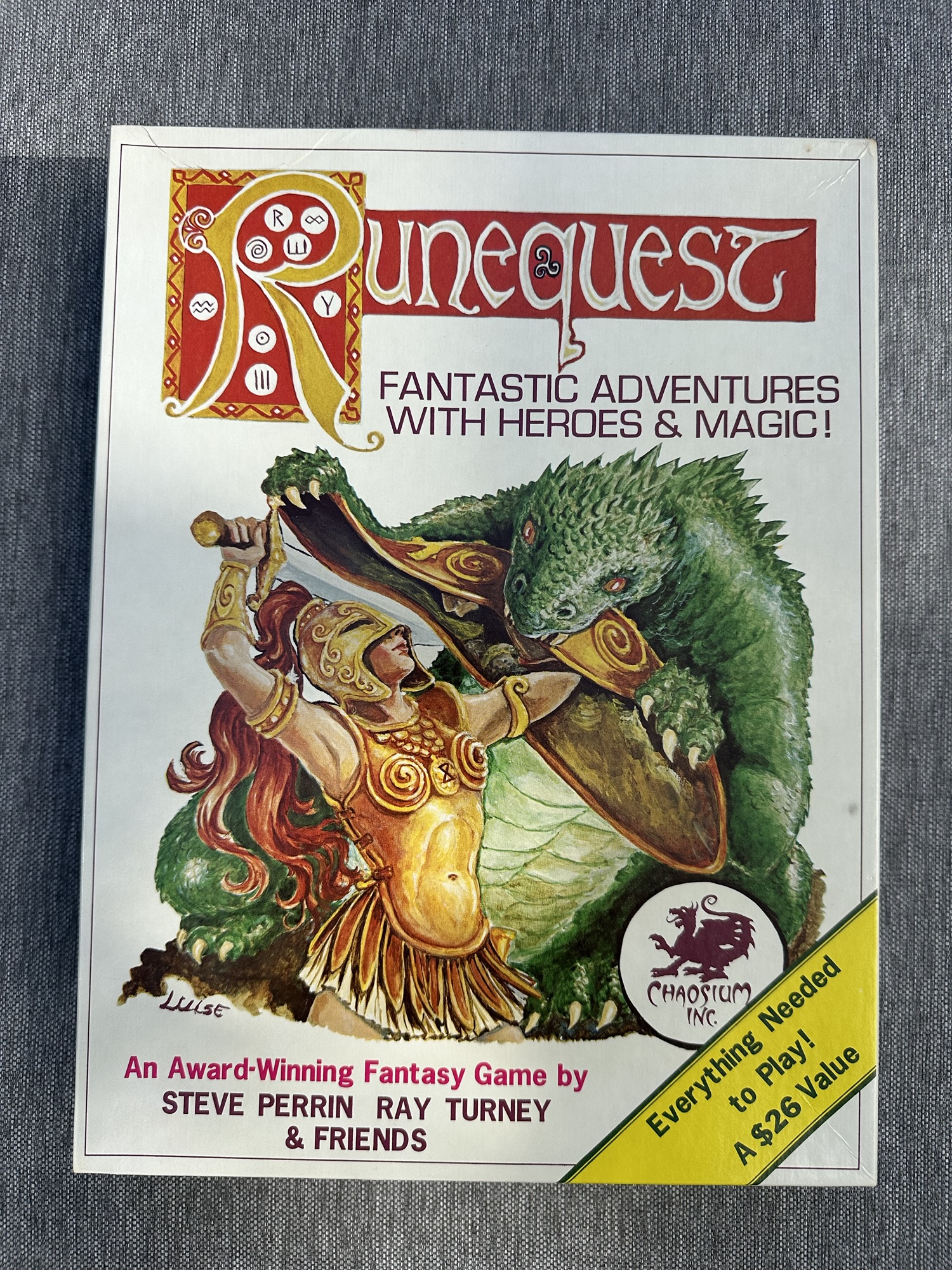
Welcome to Open Box, the part of the blog where we look backwards to look forw… wait, no that’s not correct1. It’s the part where we open the 2nd edition RuneQuest boxed set, like I said we would in the preamble! Let’s be careful with those corners, lift the lid, and take in the wonderful smell of old paper!
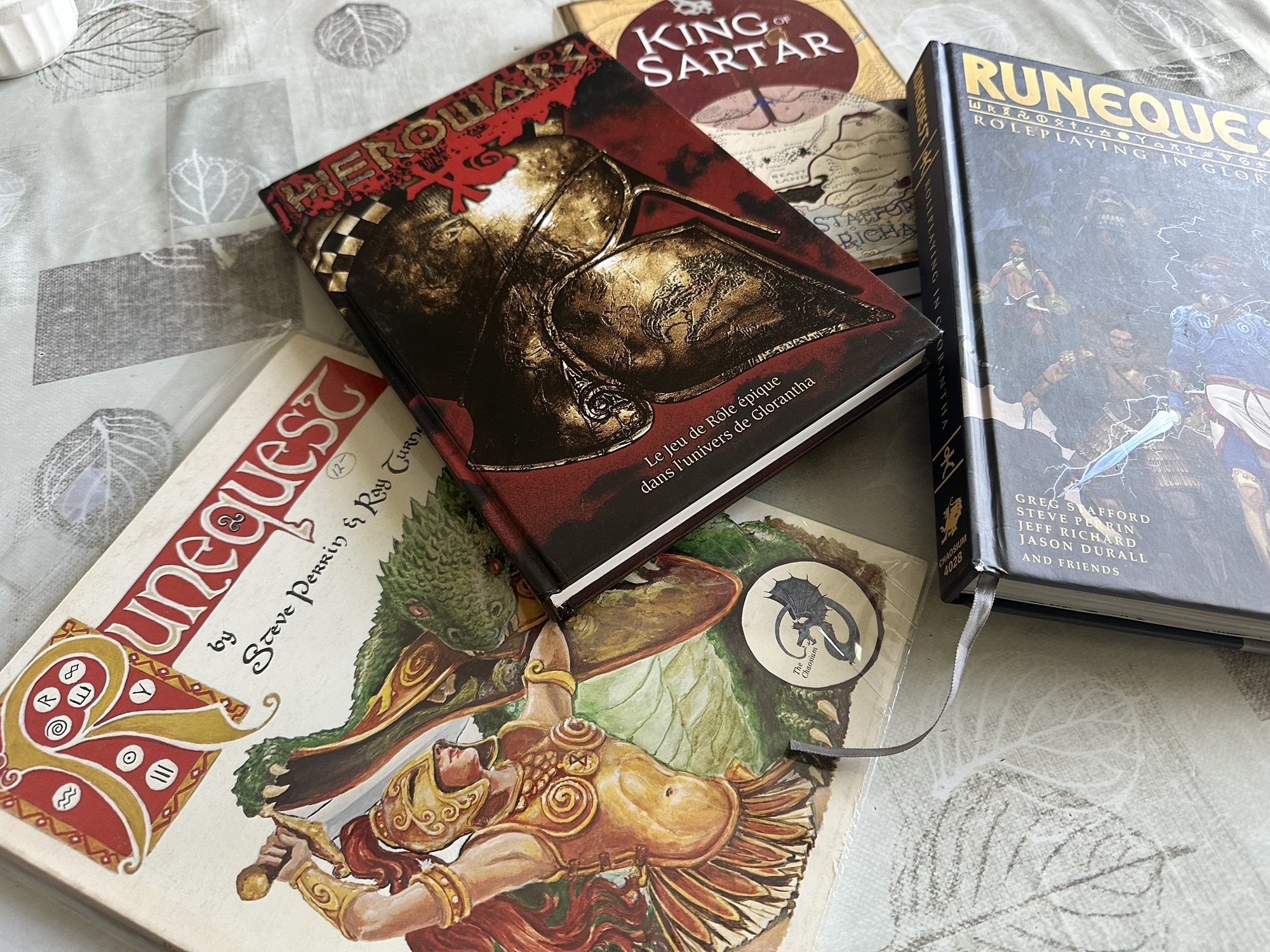
I started playing RuneQuest with the latest edition, “RuneQuest: Roleplaying in Glorantha”, colloquially known as “RQG”. I had fallen in love with the setting via its gigantic1, critically acclaimed, system-agnostic “Guide to Glorantha”2, so using the official game to bring it to the table felt like the next logical move. RQG looked great at first, even though I was immediately skeptical of some of its most idiosyncratic mechanics, like Strike Ranks3. But there was a lot of cool stuff! Divine magic that requires worship at your god’s temples to recharge! Rune affinities that model your personality! Passions that connect to your community!
But after a couple years of play, I couldn’t shake the feeling that something was wrong.
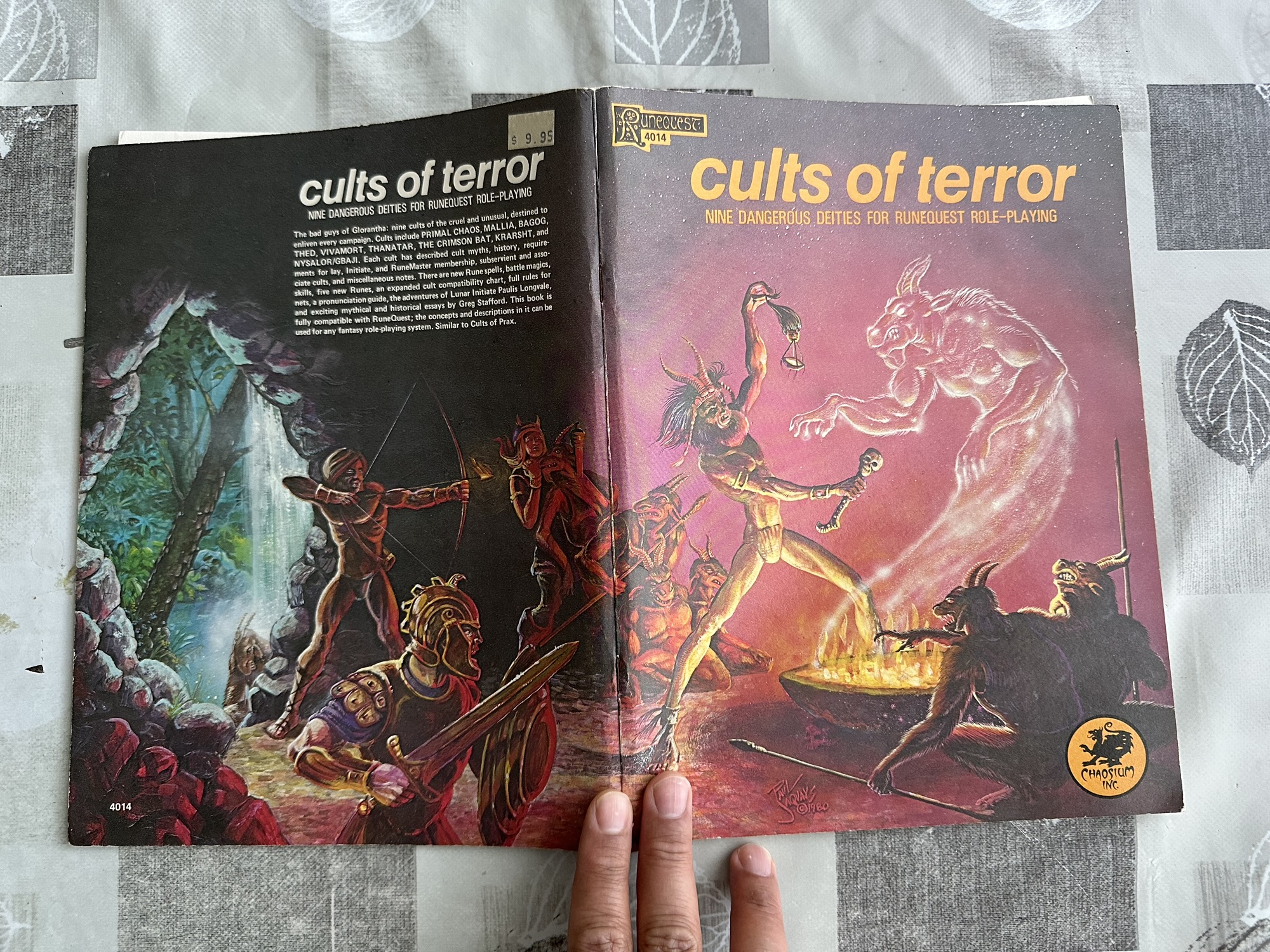
Chaos in Glorantha started as the pretty clear-cut mark for the “bad guys”, a tool for gamemasters to scare their players, and for those players to kill some monsters without remorse. But I’m a Call of Cthulhu and Delta Green player at heart, with some early formative years spent on Vampire and Cyberpunk, so I want my grey moral areas, my secret cults, my conspiracies, and my mission-giving patrons that turn out to be corrupt assholes! So let’s look at how to make Chaos in Glorantha a bit more insiduous and nuanced.
Chaosium may have a problem: Glorantha became the very thing that its critics warned us about. It’s mostly just a bunch of lore, now. How did that happen? And what does that mean for my RuneQuest games?