Ramblings of General Geekery

Actual Play: Realm Of Shadows

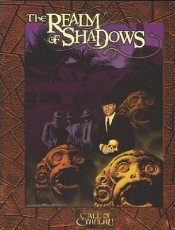
After the nice one-shot “The Murderer of Thomas Fell”, my new gaming group decided to continue with the 1930s horror genre and we played through roughly a third of the Realm of Shadows campaign for Call of Cthulhu.

It ended with a near-total-party-kill.

You can read the actual-play for “Kith and Kin” (the first chapter) and “Provender of the God” (the second chapter) over in the RPG section.

One thing that I realize now that I’m writing those things up is how often I feel the need to explain why, as a GM, I’m doing this or that – making the bad guys attack here, adding some clues there, etc. Most of the “actual plays” out there only focus on what happened around the players’ side of the table. But I’m finding it more interesting to also include what’s happening behind the GM’s screen.

This is especially interesting because investigative adventures rely a lot on the GM improvising events and moving around clues to keep the story going, as opposed to, say, a dungeon crawl, where most of the design decisions can be done upfront during the preparation phase, and the improvisation is mostly about adjusting enemies to keep combat balanced.

Adding the GM side of the game makes it easier for me to see what I did right and what I did wrong, and may even get me some constructive feedback on some of those decisions. I’ll try to keep adding things like that in the future reports.


Fanexpo Vancouver 2015

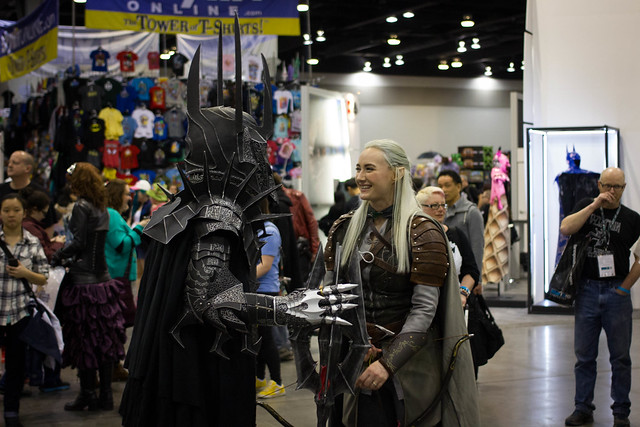
This week-end in Vancouver was FanExpo, with the shopping frenzy, celebrity line-ups, cosplay contests, and friendly comic-book sketching that you’ve come to expect from such conventions, albeit at a smaller scale for our relatively young Vancouver edition.

IMG_3672.jpg

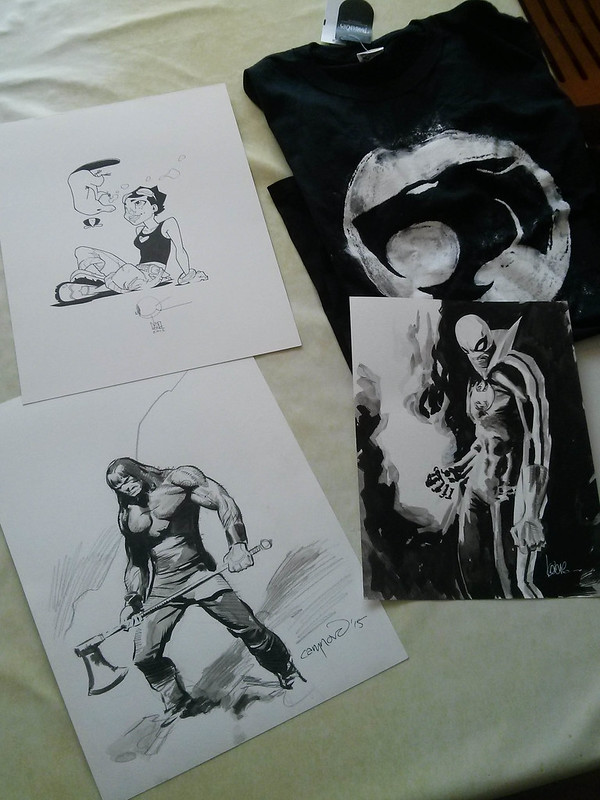
Here’s my artist-commission-focused loot this year:

2015-04-05 17.06.12.jpg

Nadia (from Kukuburi) by Ramon Perez, Conan by Cary Nord, and Iron Fist by Kaare Andrews. And a nice Thundercats t-shirt because I always need a new t-shirt.

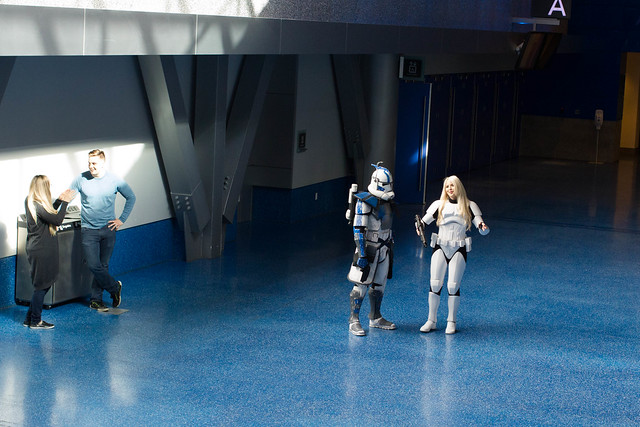
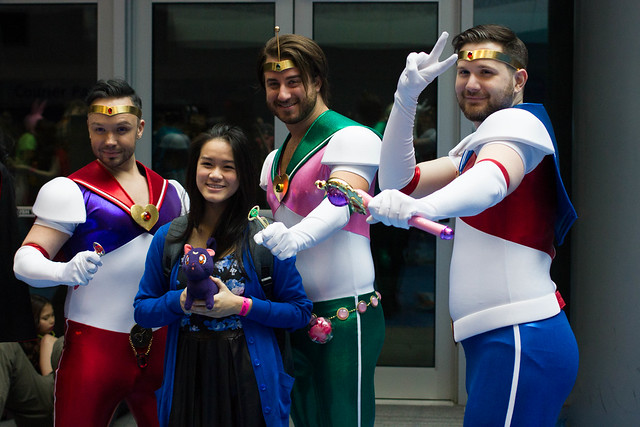
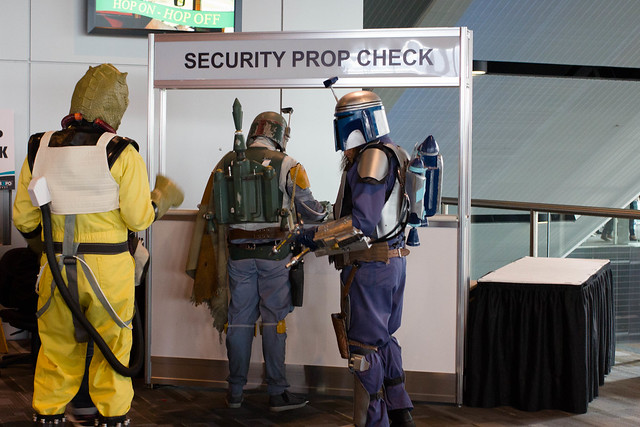
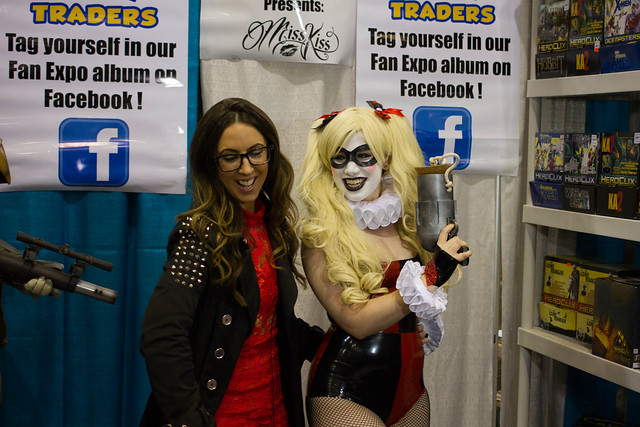
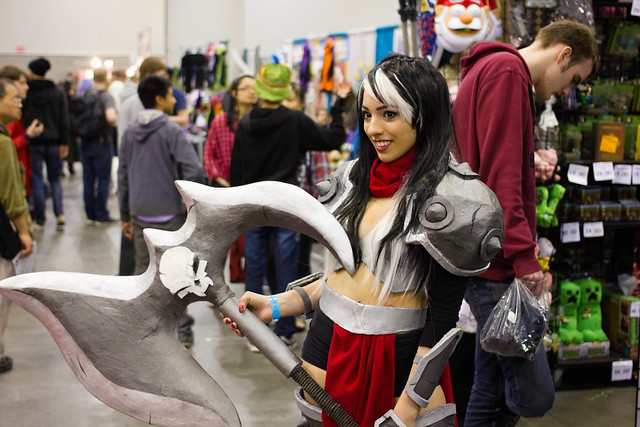
After the jump you can see some cosplay pictures I took, although you can probably see better ones elsewhere on the internet.

IMG_3667.jpg
IMG_3652.jpg
IMG_3645.jpg
IMG_3627.jpg
IMG_3631.jpg

You can see the other pictures in my FanExpo 2015 album.


Design For South Paws

Sarah Baird talks about what us left-handed people have put up with all our lives, and all the way back through history:

Day in and day out, though, the biggest hurdle faced by lefties isn’t discrimination — it’s mundane, basic functioning. Almost all facets of society, from ink pens to urban design, are crafted and structured to support, abet and cater to the right-handed majority. For lefties, functioning means a constant, conscious consideration of how they can reverse or modify their natural behavior in order to most effectively move around in the world.

The funny thing is that most of the time, I’m not even thinking about it. I’ll be, say, getting hot air blowing all over me from holding the vacuum-cleaner “the wrong way”, and not really realize that this wouldn’t happen if I was right-handed. It’s just like living in a world that’s slightly less well-designed.

Generally speaking, I’ve probably encountered less hurdles growing up in France than most North-American lefties: spiral notebooks were not used a lot (we had properly bound notebooks) and student chair/tablet combinations were pretty much inexistent.

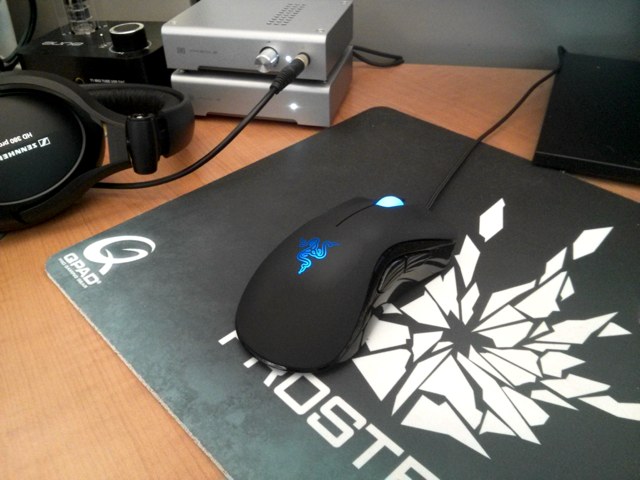
The last time I really felt the pain of being part of a market minority was when I was shopping for a new computer mouse. Being a palm gripper, I ideally need a so-called “ergonomic” mouse. But those mice are only ever manufactured for right-handed people. The only left-handed ergonomic mouse that I’ve been able to find is the Razer Death-Adder Left-Handed Edition. Many people dislike Razer for their annoying configuration software but I figured I still needed to vote with my money. And, you know, I needed a mouse.

As expected, the configuration software is annoying, but the mouse is really nice.


Actual Play: The Murderer Of Thomas Fell

To celebrate 2015 (happy new year!) I’m starting a new section on this website: actual play write-ups of RPG games. I got back into gaming a few months ago, GM’ing a few Call/Trail of Cthulhu games.

The first one is “The Murderer of Thomas Fell”, a simple, one-shot adventure that acted as an introductory adventure to my new group of players. If you’re the kind of person that reads actual-plays, or if you plan on running that adventure, you can head over here.


Gutentags for Vim

Autotags is my second “official” Vim plugin (after Lawrencium). It confirms a trend of having a terrible name (although this time for different reasons), but I’m open to changing it since it’s still early. And as that terrible name implies, this new plugin is all about automatically managing your tags.

Edit: thanks to Reddit, it was renamed to Gutentags! I edited this post after this point to use the updated name and links.

Classic Airline Baggage Tags

One of the biggest problems you face when using Vim with a large codebase – and one of the reasons most users still go back to an IDE for their day job – is that tags files in Vim suck. No wait, it’s not even that they suck, it’s that there’s nothing out of the box to help you with it. Which, well, sucks.

In case you don’t know, tags files are basically a reverse index of the symbols defined in a given codebase, as generated by an external tool like Ctags. This is what lets you put the cursor on a function call and jump to the definition of that function. It’s basic stuff that “just works” in an IDE1, but in Vim you need to create, update, and otherwise manage that thing yourself. It’s insanely archaic even by Vim’s standards.

But there’s no reason it shouldn’t “just work” in Vim, and that’s why I wrote Gutentags. Head over to the official website to get started in less than a minute.

In case you’re wondering how this plugin is different from the many other similar plugins out there, or from just doing it the retarded way (i.e. run !ctags -R . every now and then), here it is:

  • No dependencies on anything else than Vim and Ctags: no Python, Ruby, or whatever.
  • Cross-platform: should work at least on Mac and Windows at the moment, Linux should be fine too2.
  • Automatically index new projects: when you open a file in a new project, Gutentags will start indexing it right away. You don’t need to manually run it if you don’t want to.
  • Incremental tags generation: when you edit and save a file, Gutentags will properly and automatically update the index, but only for that file. Re-generating the whole index obviously doesn’t scale for large codebases, yet that’s what most tutorials tell you to do! This is madness and it has to stop.
  • Background update: you shouldn’t have to wait while the index is (re)generated (which is what !ctags -R . does! Again, madness).
  • Keep tags files away: don’t like to see lots of tags files polluting your projects everywhere? Tired of adding tags to every .gitignore or .hgignore file ever? Me too. Gutentags lets you keep them in a hidden place of your own choosing.

At the time of writing this post, Gutentags has been tested on a glorious total of 3 machines (all my own with the same Vim configuration), so watch our for bugs, and please report them on Github or BitBucket.

The usual disclaimers are in effect (this is a random piece of code you found on someone’s blog!), but I just want to warn you that since this plugin kicks off background ctags processes, there could be bugs that will generate humongous tags files while saturating your laptop’s CPU and ending up burning your balls and/or snatch. Again, report them via Github/Bitbucket after calling your local emergency dispatch centre.


  1. Except when it doesn’t. See also: Visual Studio’s Intellisense. ↩︎

  2. Yeah, I’m expecting many bug reports. ↩︎


DRM-free backup on Comixology

Me, a few months ago after the “scandal” of Comixology removing the ability to buy comics directly from inside their iOS app:

I would hope ComiXology manages to revert the change, but frankly I’d rather put my hopes in more DRM-free comics available directly from the creators and publishers instead.
Well my hopes have been answered in a way: Comixology announced last week that you would be able to download DRM-free versions of your Comixology books for publishers who are OK with that:

The first wave of participating publishers making their books available as DRM-free backups include Image Comics, Dynamite Entertainment, Zenescope Entertainment, MonkeyBrain Comics, Thrillbent, and Top Shelf Productions. In addition, creators and publishers that are self-publishing through comiXology Submit are now able to choose to make their books available with a DRM-free backup.

No surprises here about the publishers who are indeed “OK with that”, since they’re the ones who were already offering DRM-free comics on their own website… but those are excellent news. I can’t stress enough how huge this is.

I’m not sure whose idea it was – whether publishers like Image pressured Comixology to do this, or whether Comixology came to this logical conclusion on their own – but I’m very happy either way. As I said before, I had completely stopped buying Image comics from Comixology, preferring instead their own DRM-free website… but that website was slow as hell and barely usable. Ideally I’d rather give 100% of my money to Image, instead of – probably – 70% through Comixology, but the usability is night and day between the two, and uploading independently acquired files to an iPad is still a huge pain in the ass1.

“For those out there who have not joined the comic reading community because of DRM – you have no excuse now,” said co-founder and Director of ComiXology Submit John D. Roberts

Indeed.

The only problem I’ve found so far is that those backups are extremely bare: just a ZIP file with the pages as JPEG images. They’re the “retina” hi-res versions, so that’s good, but the archive is missing any kind of metadata. The only way to know what it is, short of having a human open it and read the cover, is to parse the file name.


  1. Something I’m hopping will be greatly improved in iOS8. ↩︎


ComiXology Scandal

Unless you’ve been living under a rock, you can’t have missed the news that ComiXology released a new version of their mobile app that drastically changes how comics are purchased. It was reported on technology, gadget, Apple–related, and of course comicbook-related websites. It was even discussed heavily on RPG forums.

A summary of the situation is that:

  • The iPad/iPhone app doesn’t have in-app purchases anymore – you’re forced to buy directly from the web by switching to Safari.
  • The Android app still has in-app purchases, but as I understand it they don’t go through Google Play anymore and, instead, directly hit ComiXology’s servers.

Of course, the internet being what it is, a lot of people are pissed off and are voicing their rage on social networks. I’m not happy with the change either but I’m going to try and articulate my more moderate opinion in a few points here.

It’s probably too soon

The comics industry was in very, very bad shape until recently. Digital comics revived a moribund market in a completely unprecedented way, largely thanks to ComiXology on the iPad. Digital comics let new readers discover series at their own pace without having to enter an intimidating comicbook shop and browsing through stacks of TPBs to find the first story arc. When everything is just a tap away, especially single $2 issues instead of $15 collected volumes, it’s much easier to try things and, eventually, start following one of them. Impulse buying was a big part of ComiXology’s success and the market’s recovery.

But I’m not sure the market has recovered enough at this point. Adding several extra steps between the reader and a purchase may discourage a big percentage of users who are still casual readers and not “fans” yet, and effectively stop to the inertia accumulated over the past couple years.

Profit trumps user experience

It is clear now that this change was made to align with Amazon’s strategy after they were acquired. Amazon is a company that has always walked an extremely fine line of near-zero margins in almost all aspects of their business.

So it’s not surprising that they’re first doing to ComiXology what they did with the Kindle app: avoid the 30% tax that Apple and Google have on their in-app purchasing systems. And it makes sense to do so when you already have your own micro-transaction infrastructure in place, which is the case with Amazon.

The problem is that Apple completely forbids developers from using their own system… and in this case, Amazon chooses their margin over their users’ experience.

That’s extremely disappointing but, again, not surprising coming from Amazon.

Glossing over details

Another disappointing aspect of this whole affair was how unclear the announcement was. This is the email I received:

Dear Comics Enthusiast,

We have introduced a new comiXology iPhone and iPad Comics app, and we are retiring the old one. All your purchased books will be readable in the new app once you’ve downloaded it and taken the following steps:

  • In the original Comics app, log into your comiXology account.
  • Sync your in-app purchases to your comiXology account by tapping the Restore button on the Purchases tab.
  • Download the new comiXology app. This will be your new home for downloading and reading comics.
  • Start shopping on comixology.com. New purchases will appear in the “In Cloud” tab in our new app.

Read this a couple times and tell me if you would have understood what it was all about. It says there’s a new app, but it never says why. Why are they switching to a new app instead of just updating the same one? And where does it say you won’t be able to purchase directly from the app anymore?

This is unacceptably bad communication.

It’s unclear where the money goes

And what happens with that 30% that ComiXology is going to save on each transaction? It’s totally unclear whether this will be redistributed in any way to the creators and publishers.

It would have been extremely easy for ComiXology to mention that more money will go to creators in order to get all fans behind the change. Instead, we’re left to assume this all goes into Jeff Bezos’ pockets… probably because that’s exactly what will happen.

Not really a change for me

That said, since the beginning of the platform, I’ve been buying comics directly on comixology.com in the hope that this meant more money for the creators… and if not, at least I was giving more money to a small but growing company that was making the industry better. So the new iPad app is effectively not changing anything as far as I’m concerned… except that now I’m not sure where this extra money goes anymore.

Pricing and delayed releases

Some people have mentioned that moving to a true web store will let ComiXology and publishers set a finer pricing scale, i.e. comics sold at, say, $1.50 (Apple enforces price points of $0.99, $1.99, $2.99, and so on). This may prove beneficial, but given that it’s Amazon we’re talking about, it may prove to be another opportunity to put pressure on publishers’ margins.

It will also remove the occasional hassle of issues being delayed, or even blocked, by Apple’s crazy stupid approval process because – shocking! – some of them contain adult material. But then again, it was easy enough to switch to the web store for only those rare issues.

ComiXology is becoming obsolete anyway

Another reason I’m less annoyed by this change is that ComiXology was having a decreasing presence in my reading habits anyway. Image Comics has been offering DRM free comics for a while now, so I effectively stopped buying anything from Image in ComiXology. Most Marvel titles I don’t really need to own so I’m reading them through Marvel Unlimited. This leaves DC/Vertigo titles and indie comics, and those are increasingly purchaseable directly from the author…

Conclusion

So all in all, I don’t care that much about the change from a personal user experience point of view, but it does make me worried about the future of the industry. It also doesn’t shine a good light on Amazon – although I guess that’s the least of their worries.

I would hope ComiXology manages to revert the change, but frankly I’d rather put my hopes in more DRM-free comics available directly from the creators and publishers instead.


Meeting Notes

These past couple years my free time has been consumed by work on PieCrust, Wikked, and, oh, yeah, having 2 kids and 2 cats (what I was thinking, I don’t know). As a result, I haven’t been playing music or drawing much, which I miss a lot.

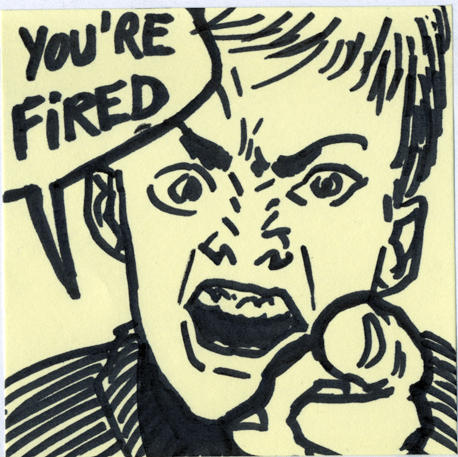
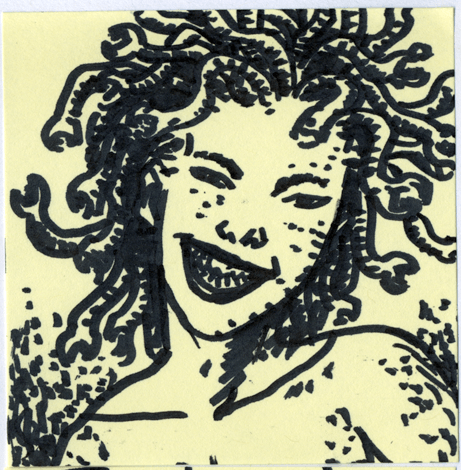
So I started doing it at work. Well, not playing music, because a drumset in the middle of the open-space would probably be frowned upon, but drawing and doodling.

The result is a whole bunch of post-it notes with some pretty decent art, which I’ve collected over on a “Meeting Notes” page. Check it out!


Fucking pick one

Paul Stamatiou has been getting a lot of attention about his article “Android Is Better”. And beyond the obvious flamebait (which seems to be working quite well), he makes a couple of points that I agree with:

  • Most people probably use more Google services (for good or bad) than Apple services, and will find the Android experience better integrated if they tried it.
  • Notifications on Android are a million times more useful and productive than on iOS.
  • It’s a lot easier to customize your phone to your specific workflows.
  • The back button and intents make it a lot easier to work between apps.

These are actually the main points that made me switch to Android a couple years ago, along with a bigger screen.

Some points however I disagree:

  • Google Now is not “magical”. It’s downright creepy and makes your device slow.
  • I don’t find Android’s UI inherently better or more elegant than iOS’, or vice-versa. I’m used to both either way.
  • You still find a lot more polished and refined apps on iOS, which is not to say they are more useful or functional, as people often mix up the two (if anything, Android’s ugly apps actually do more things). But since I’m not an app-whore – I must have only a dozen non-stock apps on my phone and they’re almost all cross-platform – I frankly don’t care. The only app I miss is Sparrow, but that bird is flying away.

Marco Arment has written a nice commentary on the story, where he first criticizes Stamatiou’s use of absolute statements (emphasis his):

Paul’s headline is his thesis, conclusion, and call to action: Android is better, and everyone should try it and will likely convert like he did. But after reading the article, I’m more convinced than ever that the best mobile platform for me is currently iOS.

That sentence contains two huge qualifiers: the best mobile platform for me is currently iOS. I’ve learned to write and think with a broader view, since it’s less insular and more accurately reflects reality. (The world is a big place.)

While reading Paul’s article, I was often struck by how differently he and I use the same technology.

His article exudes a narrow tech-world view by having no such qualifiers.

That’s fine, and as a guy who has always chosen his tech (hardware and software) based on specific needs, and not on generic opinions and reviews, I can’t agree more. I often say that if I ask a question like “what is the best X?”, and someone answers “it’s Y!” without even asking for more details about my situation first, I’m probably not going to listen to that person, quietly labeling him as fanboy or short-sighted in my mental notebook.

I wish Marco would talk to his online buddies about this, actually. For example, MG Siegler, once wrote:

I don’t know about you, but when I read my favorite technology writers, I want an opinion. Is the iPhone 4S the best smartphone, or is it the Galaxy Nexus? I need to buy one, I can’t buy both. Topolsky never gives us that. Instead, he pussyfoots around it. One is great at some things, the other is great at others. Barf.

Fucking pick one. I bet that even now he won’t.

Maybe he just doesn’t read reviews like I do. I just want a reliable opinion of what a product does well, and what it doesn’t. And then I’m going to decide which one is the best, based on what I need. But apparently, Siegler wants somebody to tell him which one is the best.

And then there’s John Gruber. I’m pretty happy with my Nexus 7, myself, but apparently “most people […] agree it was a turd”. In comparison, his first-generation iPad “works just as well as the day [he] bought it”. But oh, wait:

Update: A lot of pushback from readers on my claim above, arguing that their first-gen iPads have been rendered slow and unstable by iOS 5 (the last OS to support the hardware). My son uses mine for iBooks, watching movies, and playing games. Mileage clearly varies with other apps. (And yes, the App Store app in particular is a bit crashy.)

So yeah, mileage clearly varies on the iPad, but not the Nexus 7. And funny enough, my iPhone 3G was also rendered slow and unstable by iOS 4, the last OS to support the hardware. If I was paranoid, I would think Apple likes to leave users with a broken device to force them to upgrade, but hey, your mileage may vary, maybe your iPhone 3G is doing great.

In the end, it’s important to keep in mind that everybody’s got different requirements, budgets and usage patterns. One thing that often gets overlooked by Apple fans, for instance, is that in some countries (like here in Canada) you can’t get an iPhone unless you spend a minimum of $40-ish/month on a data plan. If you want a cheaper plan like me (I use a 500Mb plan which lets me do everything I want except streaming music/video), you have no choice but to go with another OS.

As far as I’m concerned, my iPad and my Nexus 7 get along fine in my backpack, and they must know I love them just the same – just for different things.


Image Comics going DRM-free

Image Comics is now selling DRM free digital comics on their website.

This is huge. Image Comics is the third biggest comics publisher in the U.S. after DC and Marvel. It “owns” famous titles like Spawn or The Walking Dead, and other very good series like Fatale, Invincible, Saga, or Morning Glories (I say “owns” with quotes because the whole concept of Image Comics is to publish creator owned comics, so those titles are actually owned by their respective authors).

With Comic-Con only a couple weeks away, they’re probably hoping (and I’m hoping too) that DRM free digital comics will be a hot topic of discussion, with them at the top. I mean, look at what Image Comics’ Eric Stephenson has to say about it:

My stance on piracy is that piracy is bad for bad entertainment. There’s a pretty strong correlation with things that suck not being greatly pirated, while things that are successful have a higher piracy rate. If you put out a good comic book, even if somebody does download it illegally, if they enjoy it then the likelihood of them purchasing the book is pretty high. Obviously we don’t want everybody giving a copy to a hundred friends, but this argument has been around since home taping was supposedly killing music back in the ’70s, and that didn’t happen. And I don’t think it’s happening now.

This is quite an enlightened view on piracy for someone in his position. My hat’s off to you, sir.

Now does that mean Comixology’s in trouble? Not quite yet, no:

  • First, Image Comics will still sell their issues through them – they’re just adding the option to buy directly from them for people who are, like me, quite keen on actually owning the stuff they buy.
  • Second, as far as I can tell, there’s no back catalog available yet, so you can only buy the new issues coming out now.
  • Third, there’s quite a difference between tapping a button in the Comixology app to buy and read a comic, and buying a comic on a website, downloading the file, transfering the file to your reader app, etc. One takes 2 seconds, the other 2 minutes (if you count storing a copy on your file server). Most people go (erroneously) for the faster and more convenient solution.
  • Fourth, I noticed that some issues are more expensive on the Image Comics website compared to Comixology.

But I’m cautiously optimistic. Hopefully, Image Comics will want to invest a bit in making their own sales portal better, so that they can get the whole price of an issue for themselves (I can only imagine what’s left from an iPad sale once Apple and Comixology have taken their cut…).

I’m crossing my fingers for Dark Horse to start removing DRM in a few months. Unlike DC and Marvel, they’re independantly owned, and have their own online store, so that puts them in the best position to follow suit. They may not be able to do it for their whole catalog (for example, licensed IPs like Star Wars, Buffy or Avatar may have constraints attached), but they could probably do it for titles like Hellboy and B.P.R.D, assuming Mike Mignola is on board with DRM-free comics. One can only hope…