Page Inflation in TTRPG Rulebooks
I never planned to become a TTRPG collector but, you know, it kinda just happened. I started looking on eBay for the games I used to play as a kid, and then I wanted to have a look at the previous editions of games I’m interested in, and then I’d hear about this or that old supplement or scenario that’s “worth checking out” and then… well frankly, OCD kicked in and I wanted to see all the books nicely lined up on the shelf.
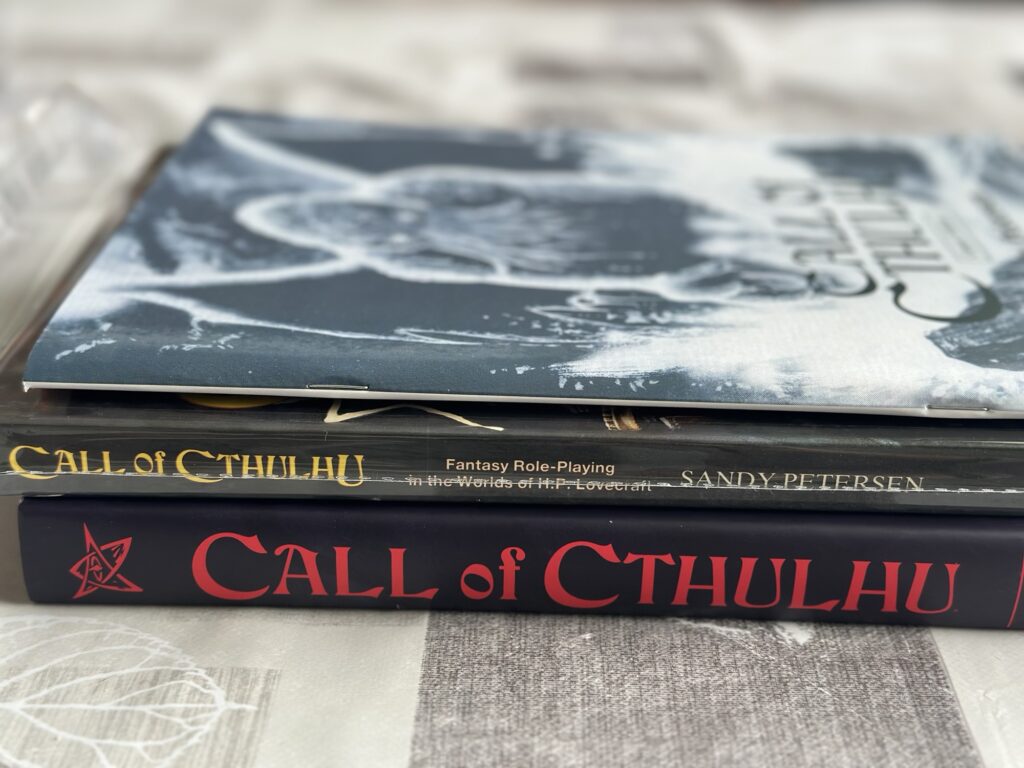
But then I realized what I think most of you already know: books get fatter as new editions get released. How much fatter? Well, I’m glad you asked, because that means it’s spreadsheet time!
Gathering the Data
My criteria for games to be included in the data was that (1) they must have been around since at least the 1990s, and (2) they are at least on their 3rd edition. I’m sure I missed a bunch of games that fit this criteria, but these are the ones that came to mind, mostly because I have them.
Let me give a bit more context for this data.
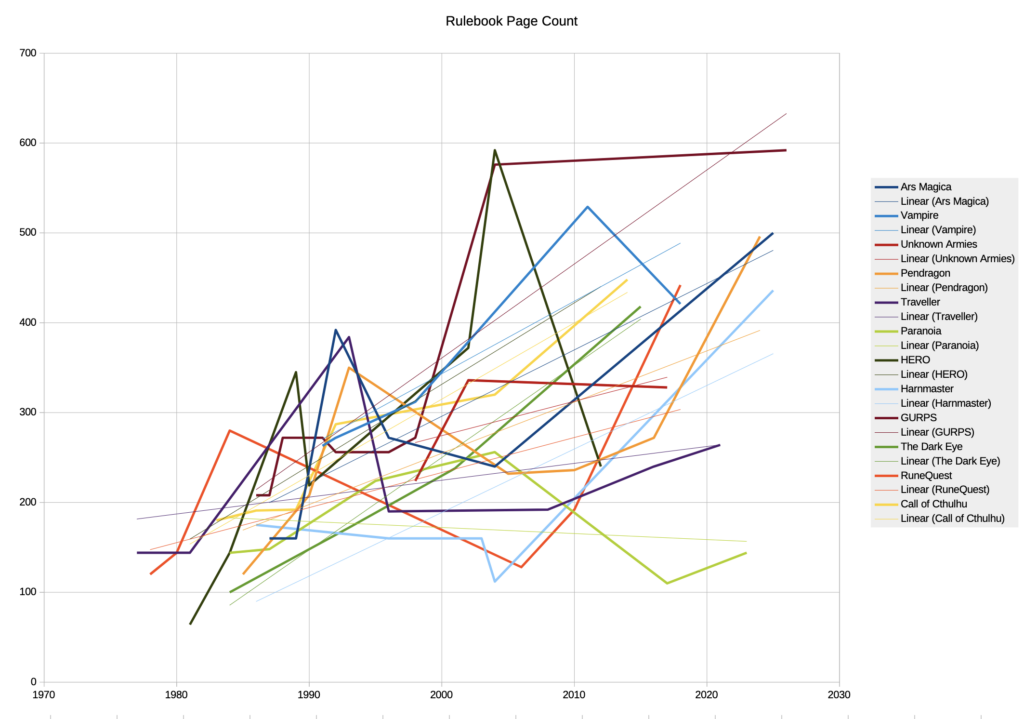
First, the thick lines are the actual page counts, keyed to the year of release of that particular book. Obviously, this is the page count of the game’s core rulebook. I used a mix of my own library and RPGGeek to determine this. The thin lines are the “trend lines”, and you can see that pretty much all the games are trending upwards, except Paranoia which is trending slightly down, even despite a page count bump in the late 90’s and early 00’s.
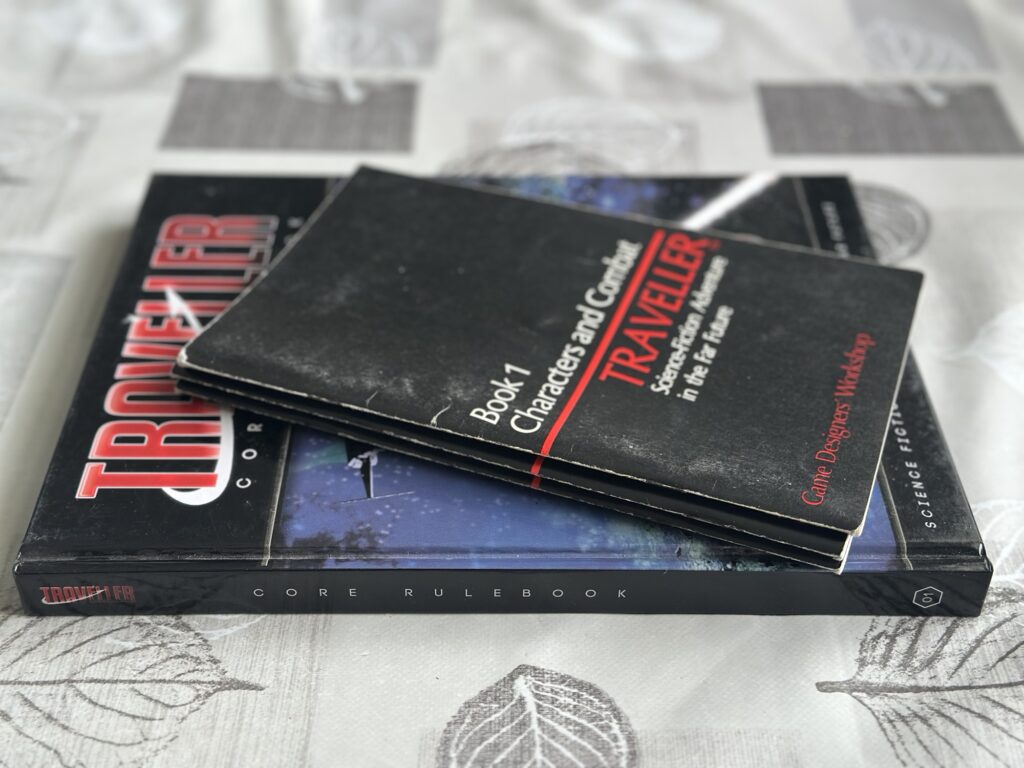
Second, most of those entries are pretty much exact page counts (give or take a couple) except for one particular case: the page count for the upcoming Ars Magica Definitive Edition is approximated based on the marketing material (“over twice the original page count!”). There are other things worth noting. For instance, while GURPS 4th Edition Revised isn’t out yet, we know the page count from the FAQ page. Also, some games changed their book format from one edition to another: the Classic Traveller books are digest-sized, while later editions are letter-sized. I didn’t bother applying a page-size-ratio here because it didn’t look like it would change what the data tells us.
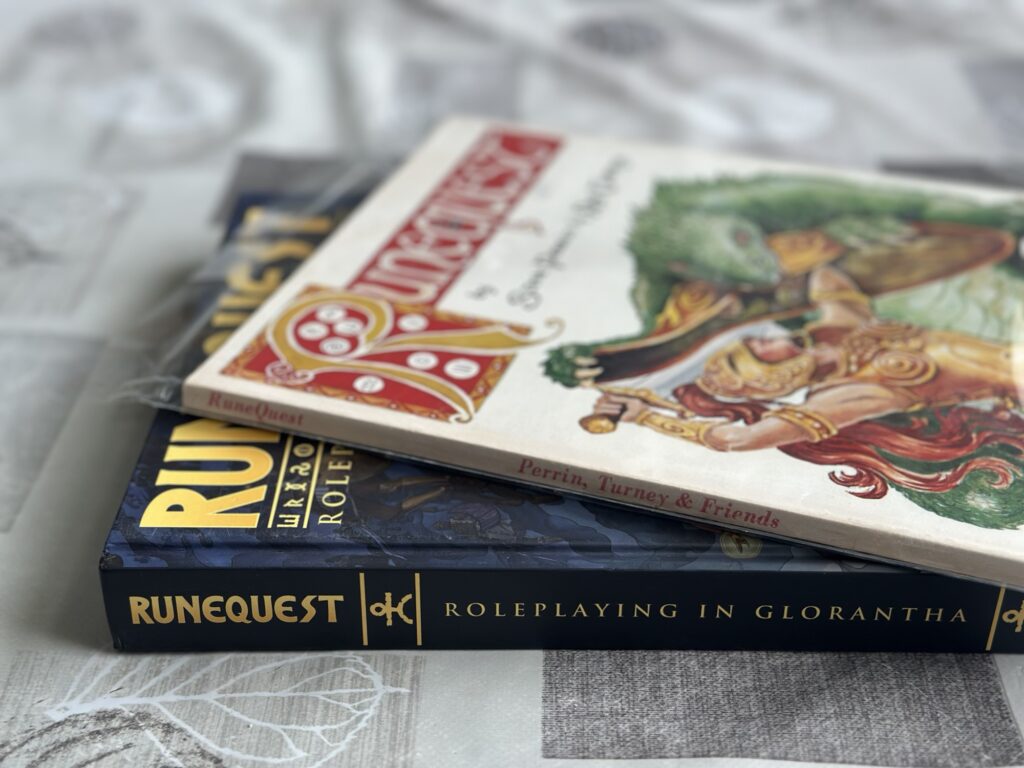
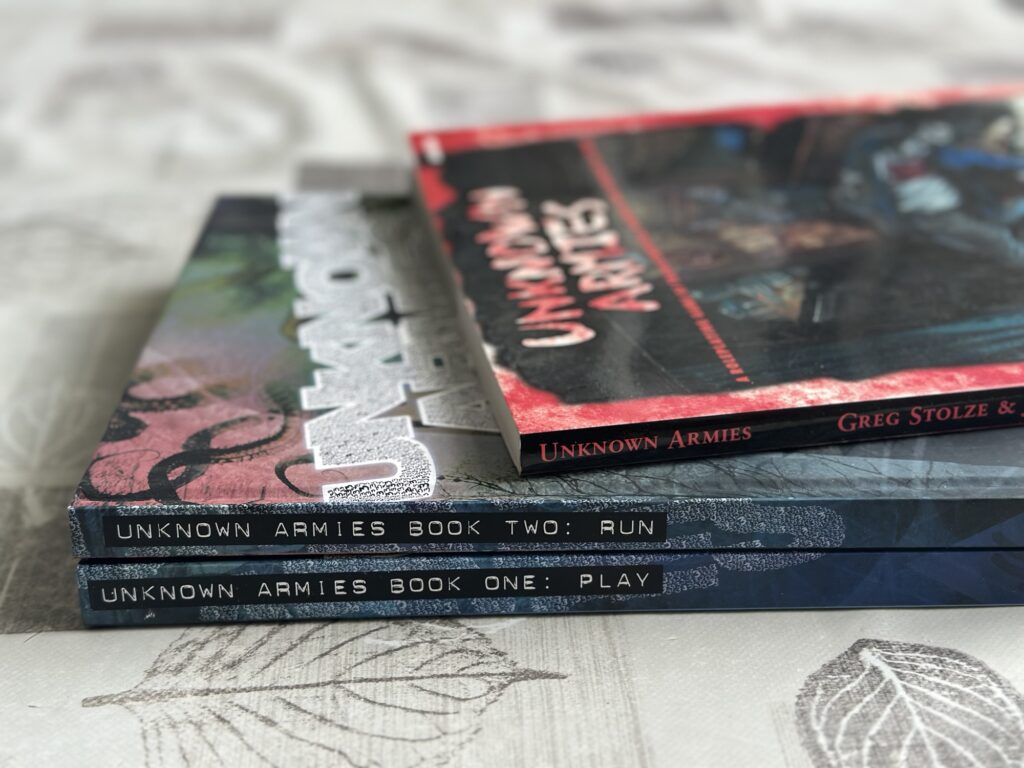
Third, some arbitrary decisions must be taken the case of games with more than one “rulebook”. For instance, if you were to add Dungeons & Dragons to this graph, would you only count the Player’s Handbook, or include either/and the Monster Manual and Dungeonmaster Guide? What constitutes a “rulebook”? I had to make some choices. For instance, the 3rd edition of Unknown Armies splits the previous editions’ rulebook in two (“Play” and “Run”) and I included both here. Same thing with Pendragon’s 6th edition, since the “Core Rulebook” didn’t include basic stuff like battle rules, which are in the “Gamemaster’s Handbook”. On the other hand, most previous editions of RuneQuest included a bestiary, whereas the latest edition does not. I didn’t include the Glorantha Bestiary in the page count here because, well, it’s already looking bad as it is, and I need to be nice to RuneQuest sometimes.
What’s Going On
Like I mentioned, the trend lines are pretty clear: all these rulebooks are getting fatter, except for Paranoia which, ironically enough, is the only game staying sane.
We can see an obvious cluster of page count bumps around the 90’s, and another one around the early 2000s. I have no proof for what caused this, but I’m going to assume a combination of (1) a growth in the audience, (2) better production, shipping, and/or distribution costs, (3) the arrival of layout software that makes it easier to make bigger books in the first place, and (4) simply the fact that multiple games started around the same time, and got new consistently bigger editions together.
Hopefully someone with more insider knowledge of the industry can chip in and talk about what went on from one decade to another. I haven’t found any prior art on this, but I may have missed something.
Why Is This Going On
Now come the more interesting questions: why are rulebooks getting fatter? And, for your next online flamewar, is this a good thing or not?
To me the “why” is a combination of two factors: (1) each new edition “needs to add more stuff” compared to the previous edition, and (2) TTRPG books have more and more artwork in them.
Let’s get that second reason out of the way: unless you’re going from, say, a Traveller-esque art-less technical manual, directly to an artsy Mork Borg-esque next edition, I believe the art-driven page count inflation generally stays rather small. But yes, more art is always good, assuming the art is good.
And now back to the first reason: that new editions “need to add more stuff”. You can often see that across marketing material and back cover blurbs. After all, why would people buy the new edition, if it doesn’t contain new stuff? Capitalism’s myth of the eternal growth is only natural, right? Well, no. Fuck the capitalist mindset, obviously, but also fuck that whole premise in general.
The Cognitive Creep
The main problem I have is that there’s a “cognitive creep” problem to each of these games.
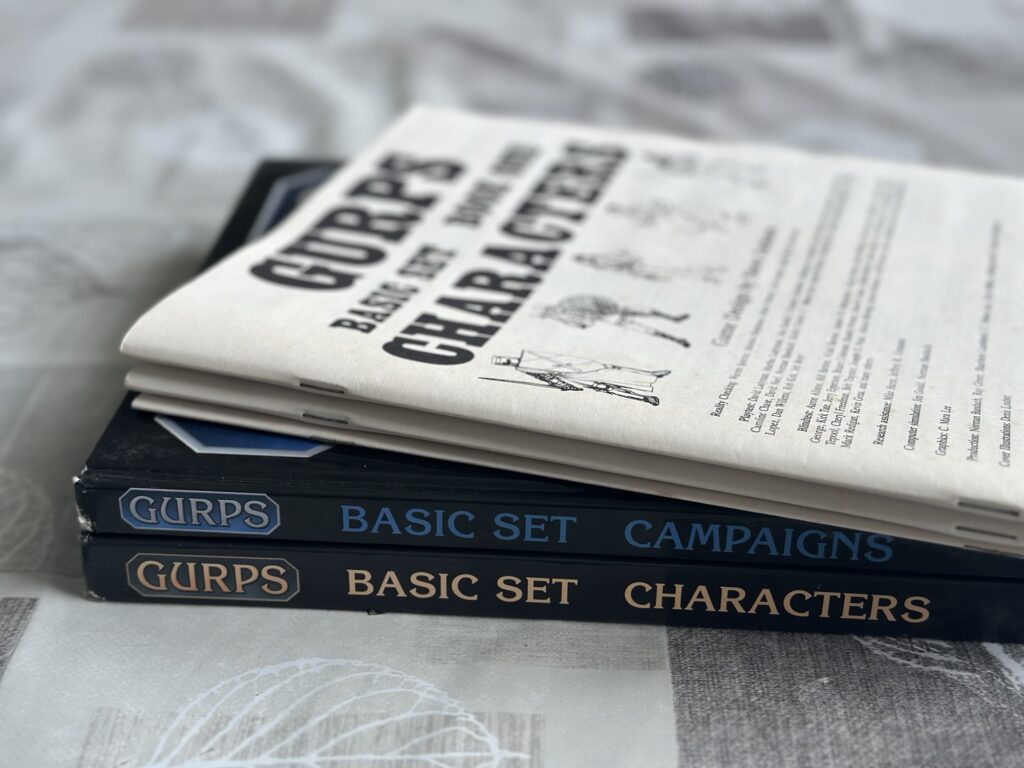
Consider the long-time grognard fan of the game. They started playing back in the first edition, when it was a 96 pages-long book full of goodness and promises. They continue playing through the second edition, which adds a couple of new characteristics and several new skills, adds “more detail” to combat, and some optional rules for boat crews. Third edition adds more spells and some new playable alien species, plus overhauled sea combat rules with “many more tactical options”. And fourth edition adds cooking rules, even “more detail” to combat, and a handful of new alien species.
This hypothetical gamer went through all of these editions and, each time, only had to learn the changes introduced in that edition. They have probably already internalized most, if not all, of the previous edition, so they adjust their mental model of the game with whatever is new in the next edition.
Compare that to the newcomer who starts directly with the fourth edition. It’s a mess. Their players suffer choice paralysis because there are 16 alien species and 150 spells to choose from, combat rules are too crunchy, and why the hell are there cooking rules. These new players have to take the brunt of 30 years of “growth” in one seating.
Isn’t More Better?
I already know that some people will object: isn’t more material better? Isn’t it great to have more spells and monsters and optional rules?
Sure, but that’s why we have supplements and sourcebooks.
We don’t need all this stuff to get started, and we know we don’t need it because that’s how these games started anyway. Ironically, the publishers of these games also know it, because most of them release “Starter Sets” and “Quickstarts” to address this problem. What used to be “this game is cool, I want to know more, so I’ll buy some supplements!” has now become “this Starter Set is cool, I want to know more, so I’ll buy the rulebook!”… is that progress? Does that make much sense?
It doesn’t make much sense to me. The rulebook is going to either repeat half of what the Starter Set already contained (so you get less for your money), or, confusingly enough, you’ll have to re-learn the rules because the Starter Set was different somehow, instead of being a subset of the core rules (I’m looking at you, RuneQuest, but you’re not the only one… shit, I said I was going to be nice to RuneQuest). And if you can just skip the rulebook and directly go from the Starter Set to the supplements and adventure books, then why is there a rulebook in the product line-up at all?
The Alternatives
Free League’s Dragonbane effectively answers my last question with an emphatic “yes”. The rulebook is the Starter Set, and vice versa. You get the full rules in a fat box with a full campaign, an awesome map, some pre-gens, some dice and standees, and much more. It’s a playable core rulebook. If you want to save some bucks, or don’t care about the “Misty Vale” campaign and setting, you can get the exact same rules as a simple book instead. The rules fit in 118 pages, with spells and monsters and gear and everything.
Also, the whole premise of a new edition having to “contain more stuff” than the previous edition is not a given. Mongoose Publishing is looking at a possible sustainable model for new editions of Traveller. Their first edition was 192 pages long in 2008. The second edition grew to 240 pages in 2016. Instead of a 3rd edition, they opted for an “update” in 2022, which grows a bit more, to 264 pages. Now, they plan to regularly “update” the second edition every 5 years or so (maybe), and I doubt that each update will grow much beyond the current page count, for practical reasons. This “Ship of Theseus” approach may allow the authors to refine and change the game while avoiding the “cognitive creep” problem I mentioned before. That’s because it’s an easier pill to swallow, marketing wise, when it’s “not really a new edition”.

My New Year’s Resolution (in May)
So here’s my totally arbitrary new personal philosophy towards rulebooks:
- If a rulebook is above 128 pages (letter-sized), I’m becoming very suspicious. Or 256 pages if it includes a secondary world setting or other good reason.
- Becoming very suspicious means “I’ll maybe just get it in PDF, or pass and go read something else instead”.
Some wiggle room is warranted. For instance, if a rulebook has 200 pages of random encounter tables, hex-crawl maps, spaceship deck-plans, or silly spell effects, that might interest me quite a lot! But that’s what I mean by “getting suspicious”: I’ll take a closer look and see what these pages are filled with. Yeah, I know: skimming through a book before buying it! What a novel concept! I never said I was a very bright guy…
Anyway, what do you think of bigger rulebooks? Are they awesome, or do you have a page limit?