Everything I Learned About GMing Was With Call Of Cthulhu: Automatic Clues
I got into TTRPGs around the turn of the 1990s and, after my first few games, fell into a long tunnel of Call of Cthulhu gaming. I pretty much exclusively GM’ed Call of Cthulhu from the mid-90s to the late 2000s, including a lot of Delta Green, which back then was a Call of Cthulhu sourcebook.
I wasn’t online much at the time, so all the GMing techniques I picked up during that time were through adventure books, friends, or by myself. I suspect that investigative horror games like Call of Cthulhu are uniquely positioned to force the GM to develop good technique, and that’s sort of what I want to explore here through the lens of my own formative GMing years… and let’s start with “automatic clues!”
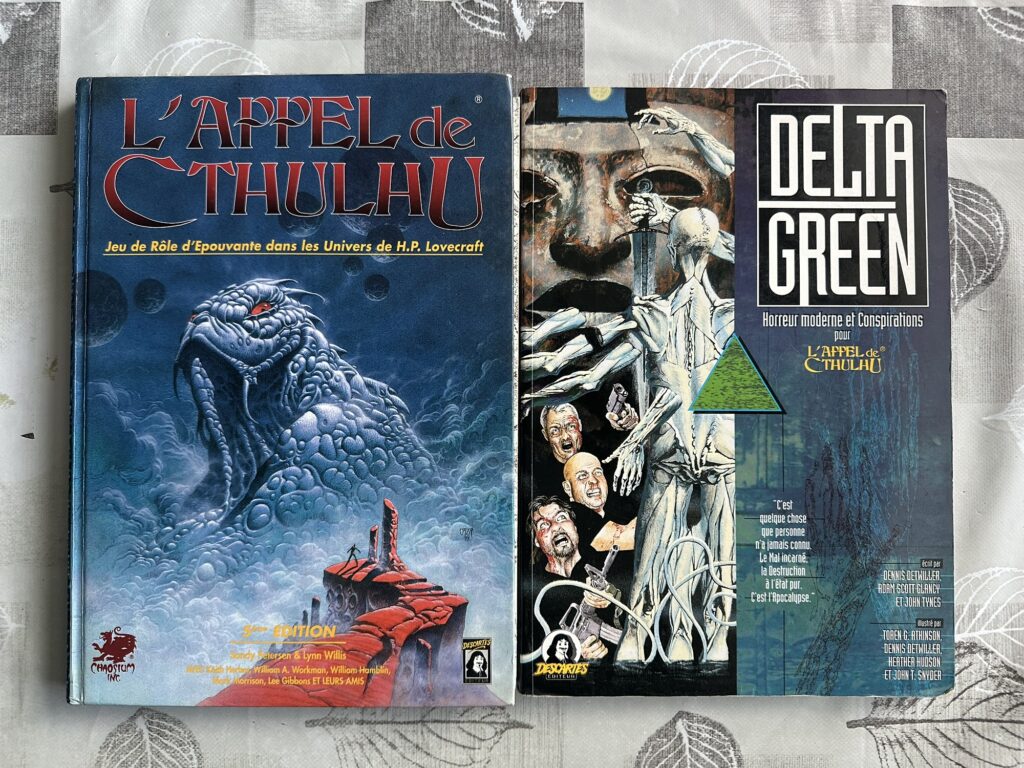
Before we get on with it, yes these are the French editions of both Call of Cthulhu 5th edition, and Delta Green 1st edition in the picture above. They were published by Jeux Descartes, who commissioned the titillatingly psychedelic comic-book artist Caza for the cover on the left. Well, Caza is usually titillating and psychedelic, but not so much here.
The General Idea
I think that “automatic clues” are a well known GMing technique these days. The common wisdom goes that you should not put core clues for your mystery scenario behind a skill check, because if the players fail that roll, the game suddenly gets blocked. The players wouldn’t have the necessary information to know where to go next, and you’re fumbling around trying to find another way to get them there.
Instead, you could… you know, just give the important clues for free, as soon as the player characters are in the right place, or talking to the right NPC, or whatever. You can always ask for a roll, but only to unlock additional optional clues. These clues might allow players to be better prepared for what’s ahead, or give them additional glimpses into what’s really going on.
Some people feel so bad about this problem that entire new game systems have been developed about it. The most famous one is probably the GUMSHOE system by Robin Laws, which powers most of Pelgrane Press’ excellent product line-up.
Chaosium’s Culture of Handouts
Funnily, and that’s sort of why I’m starting this article series with it, I did not stumble upon the “automatic clues” technique through the usual problem of “game is stuck”. I stumbled upon it… through fancy handouts.
Call of Cthulhu has a sort of special place in the gaming scene when it comes to handouts. From the very start, the game encouraged GMs (“Keepers”) to provide cool-looking handouts during scenarios: newspaper clippings, telegraph notes, letters, snippets from personal diaries, and so on.
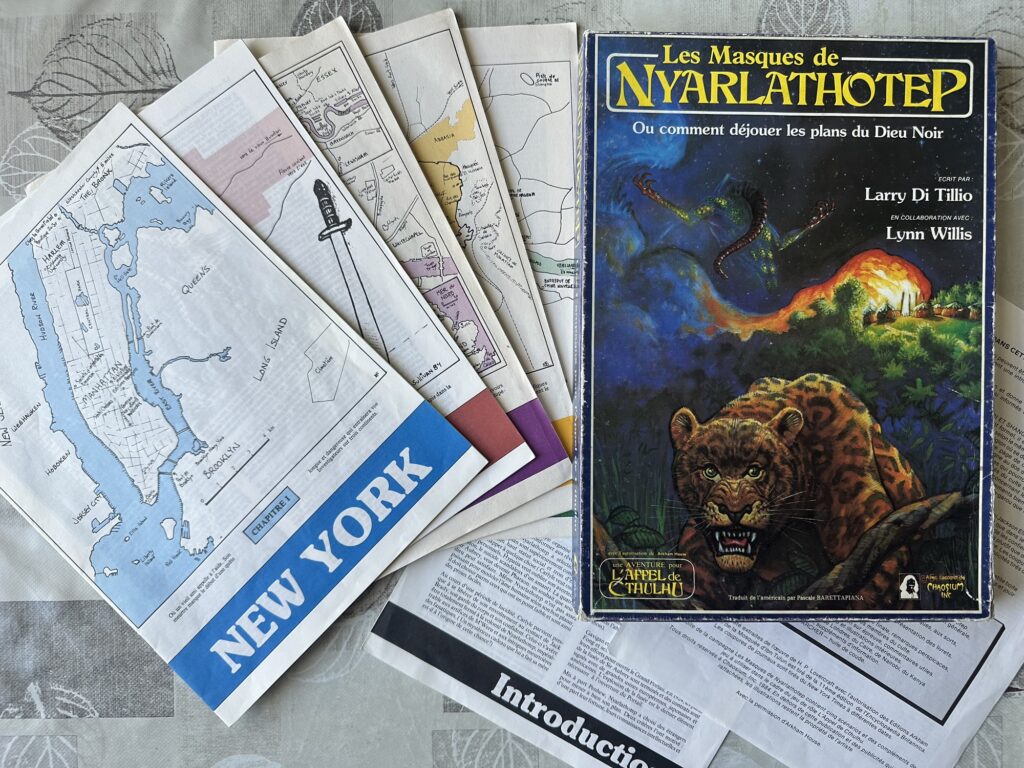
The famous “Masks of Nyarlathotep” campaign (pictured above) even more famously includes a whole bunch of handouts like these. Here are some pictures of the handout booklet from my original French edition:
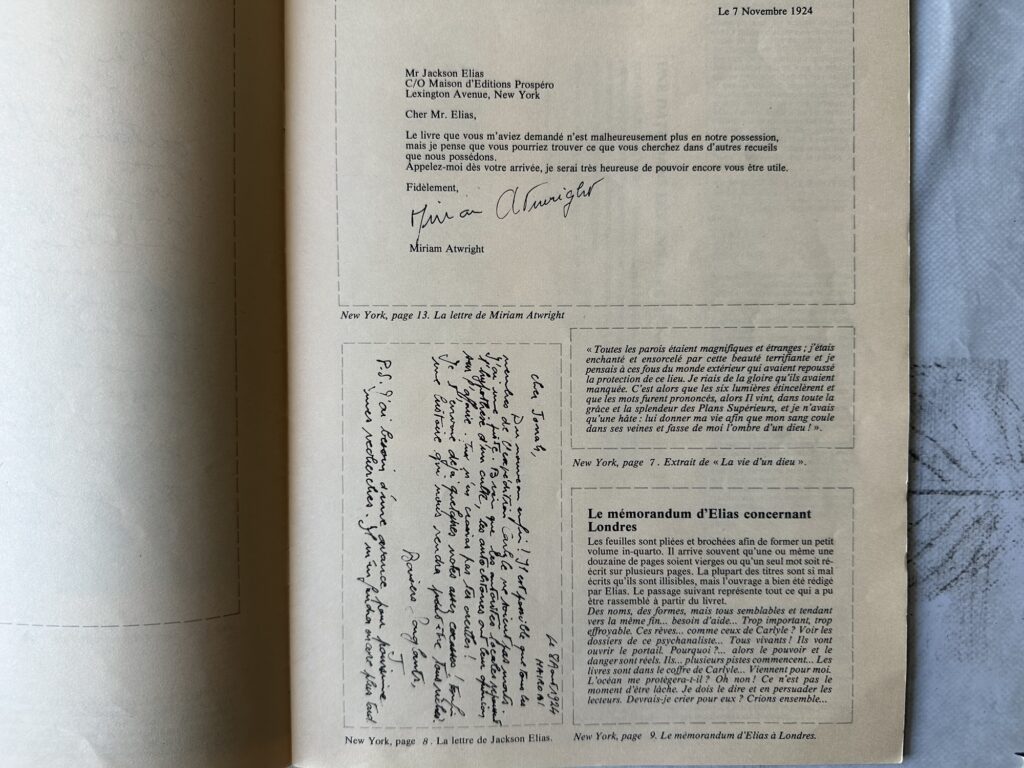
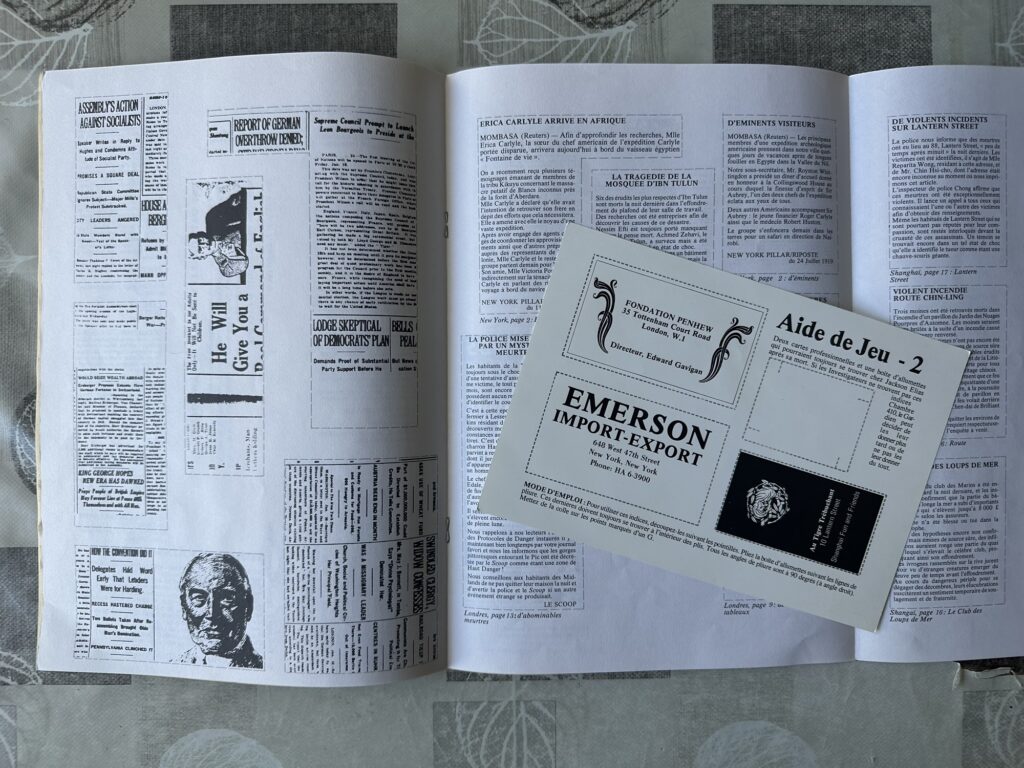
Note that I’ve run the campaign, like, one-and-a-half times, but haven’t cut anything out from the book because I’m too precious about it. I photocopied the pages and then cut the photocopies.
There’s something very special about giving these cool-looking handouts to the players. Everybody loves a good handout! I still remember my players being amazed at “finding” a matchbox for a mysterious bar in Shanghai! I’m pretty sure everybody has heard about that matchbox… And some people love fancy handouts so much they make a whole business around it, like the H.P. Lovecraft Historical Society making this absolutely jaw-dropping package of handouts for Masks of Nyarlathotep.
So of course, soon, as I started running my own scenarios, I also started making my own handouts!
Some Homemade Handouts
Here are some examples of the handouts I made for my scenarios. As you can see, they range from Missing Persons’ reports from the FBI to badly-aged hand-written letters, police incident reports, personal address books, and more. I think once I even made a garbage bin out of various “clean” garbage items, and one of these crumpled letters you can see below tossed in there — so the players had to literally search for clues in an NPC’s garbage!
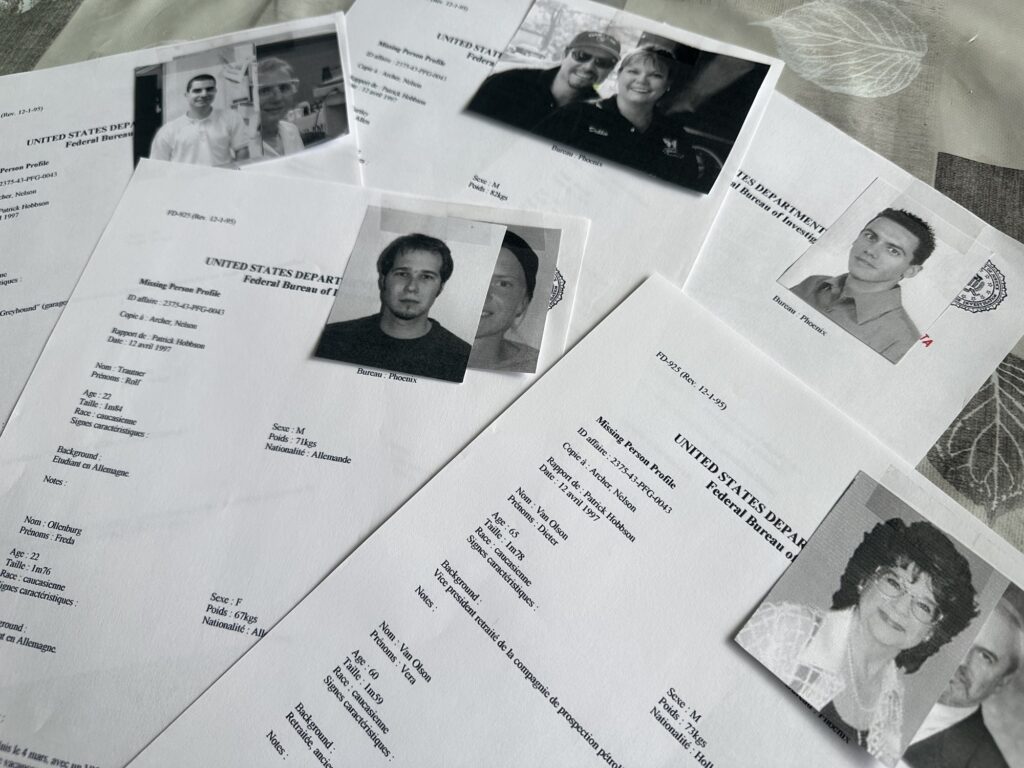
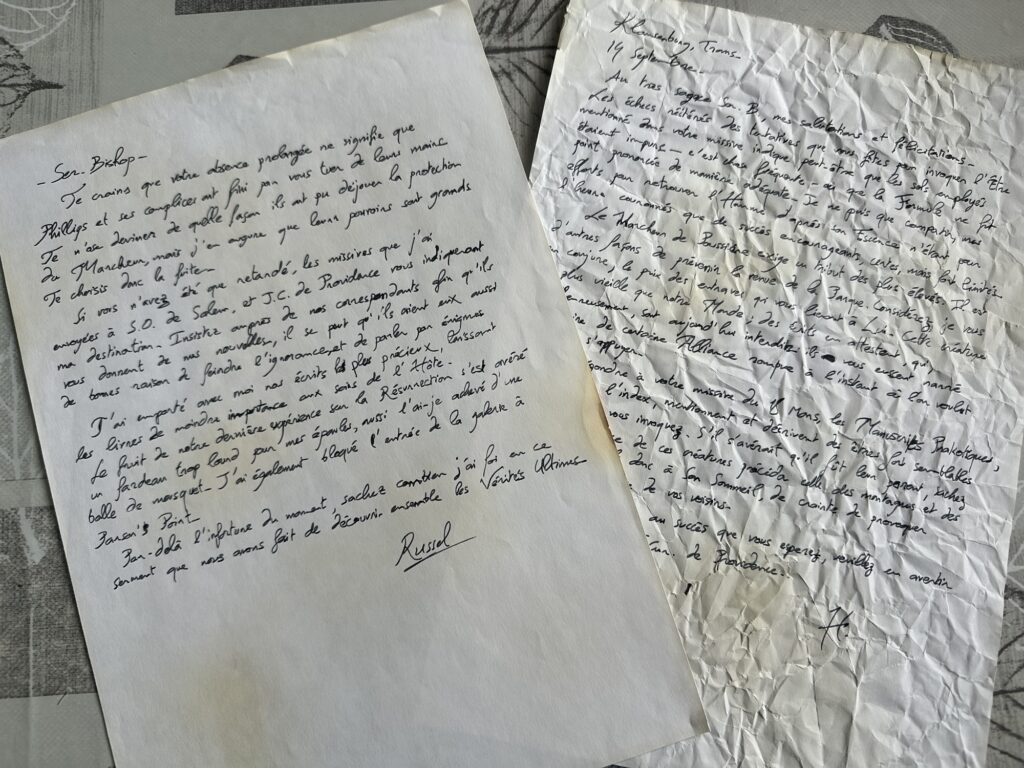
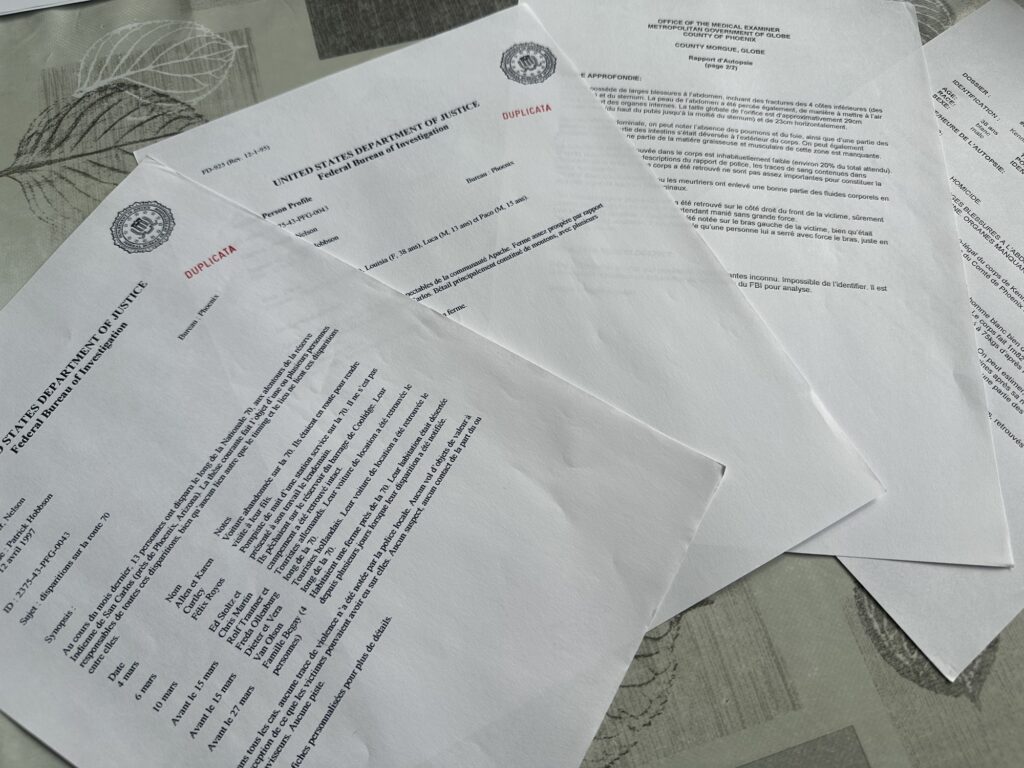
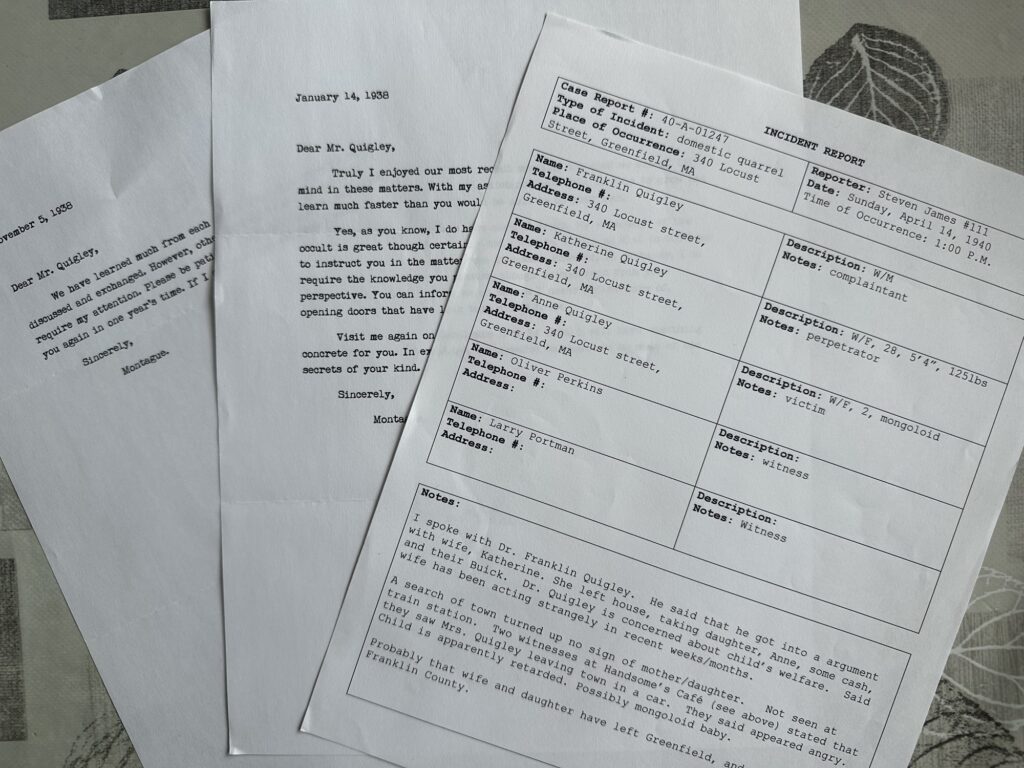
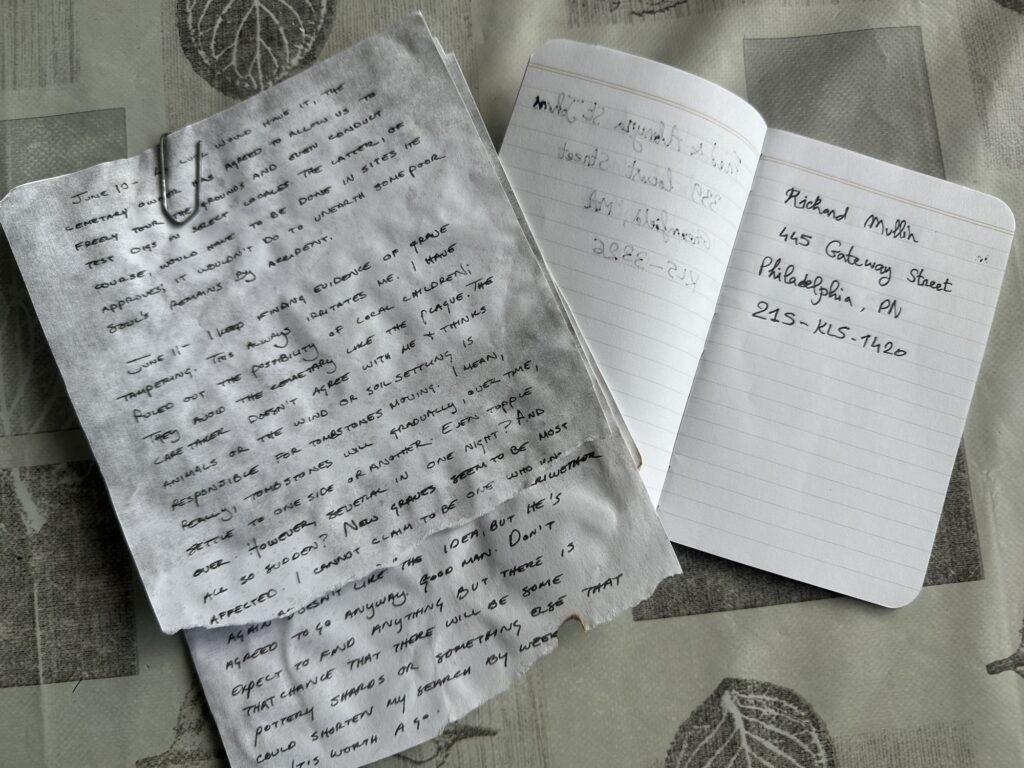
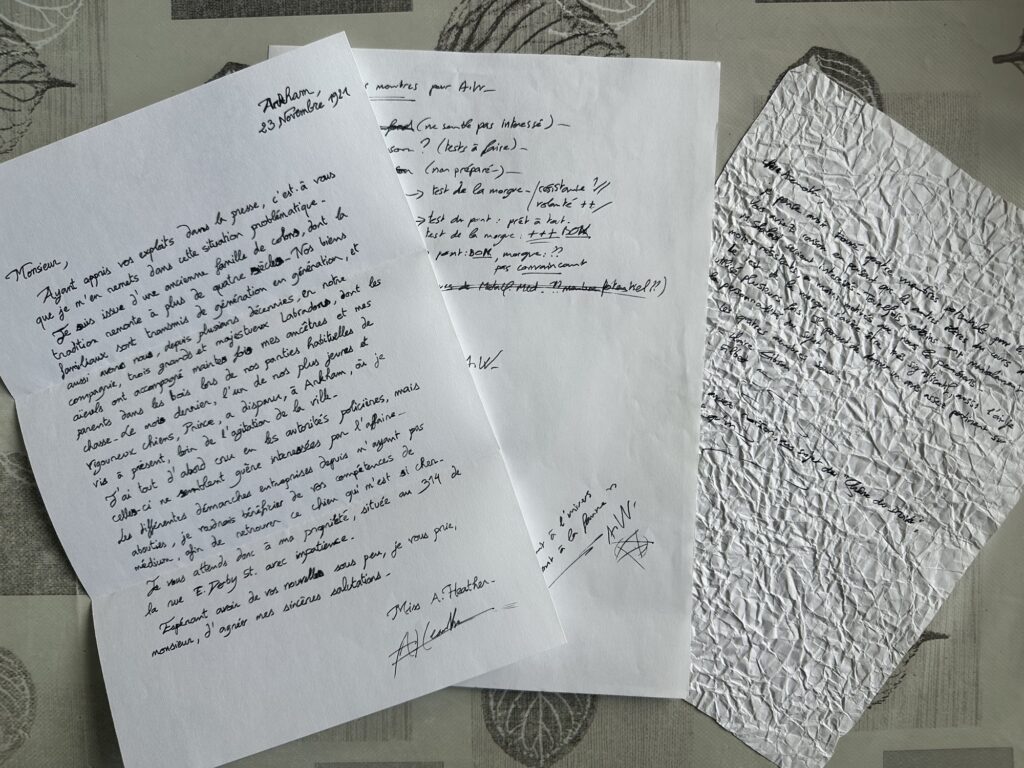
Most of these handouts would have been played in the late 1990s and early 2000s. I think each took between 20 minutes and 2 hours to make. Maybe a few of these were a bit faster to make, because they might have been copied from an existing scenario and turned into a home-made handout for fun, or for translation in French, or both.
No Handout Should Go To Waste
Now, you can probably tell when and why I quickly developed the “automatic clues” technique: it was sometime in the late 90s, I had some cool handout I couldn’t wait for my players to get their hands on, and….. they failed the roll to find it. I spent a bunch of time making a fun handout, and it was going to go unused? Fuck that!
I can’t remember which handout or adventure it was, but I remember the neurons firing in my brain for a few seconds before I said: “OK, too bad, you only find this thing”, and then passing the handout anyway. Of course, never mind the fact that this was a bold-faced lie, and that I of course had only that one clue prepared, but this rewired my brain for the years to come. After that, all the clues important enough that I made them into a handout were given for free.
Call of Cthulhu strikes again!

How did you start giving free clues to your players? I’d love to hear about it, especially if it’s for a reason other than “I heard it from some YouTuber” 😅 Otherwise, do you have a favourite GMing technique? Mention it and let’s see how I probably also learned it from GMing Call of Cthulhu!
Happy gaming!